The Best Fluffy Pancakes recipe you will fall in love with. Full of tips and tricks to help you make the best pancakes.

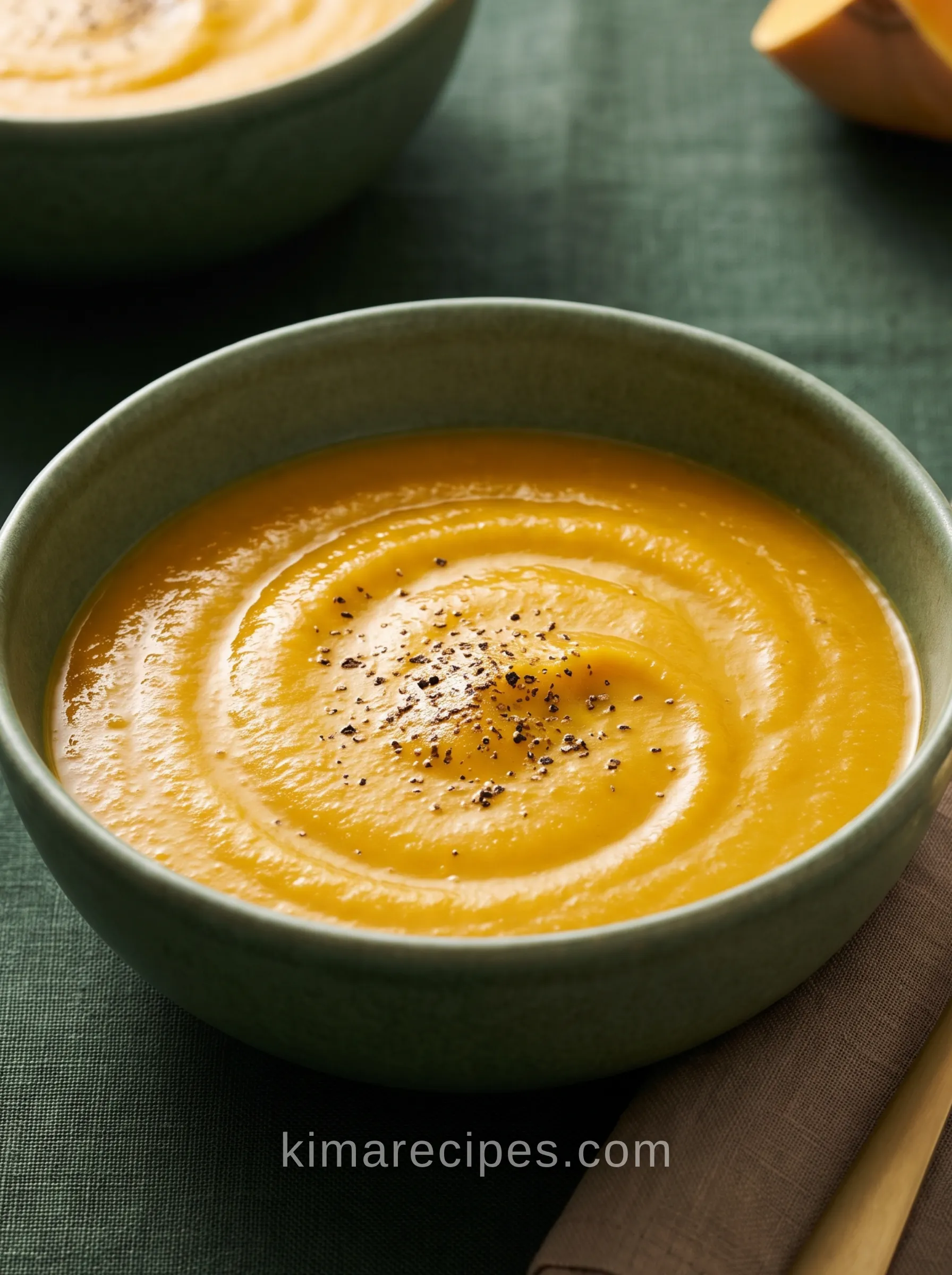
The first time I made this butternut squash soup, I almost skipped the potatoes. Glad I didn’t — they’re the reason the texture holds up instead of turning watery after blending.
This isn’t a fussy soup. Butter, a few standard vegetables, chicken stock, and a blender. That’s the whole operation. No cream, no coconut milk, no immersion-blender-only requirement — a regular countertop blender does the job, in batches if yours is small.
Why This Works
Squash alone blends thin. The potatoes and carrot aren’t filler — they carry starch that thickens the base once everything’s pureed, so you get body without reaching for cream. Browning the vegetables before adding stock matters more than it looks like it should: skip that step and the soup tastes flat, almost boiled-vegetable flat, instead of having that rounder, slightly caramelized backbone.
Order matters too. Stock goes in only after the vegetables have had their five minutes in the butter — pour it in too early and you steam everything instead of browning it.
Ingredients
- 2 tablespoons butter
- 1 small onion, chopped
- 1 stalk celery, chopped
- 1 medium carrot, chopped
- 2 medium potatoes, cubed
- 1 medium butternut squash, peeled, seeded, and cubed
- 1 (32 fluid ounce) container chicken stock
- Salt and freshly ground black pepper, to taste
Instructions
- Melt the butter in a large pot over medium heat.
- Add the onion, celery, carrot, potatoes, and squash. Cook until lightly browned, about 5 minutes.
- Pour in enough chicken stock to cover the vegetables.
- Bring to a boil over medium-high heat.
- Reduce the heat to low, cover, and simmer until all the vegetables are tender — about 40 minutes.
- Transfer the soup to a blender and process until smooth. Work in batches if your blender is on the smaller side; don’t overfill it with hot liquid.
- Return the soup to the pot and stir in any remaining stock to reach the consistency you want.
- Season with salt and freshly ground black pepper.
- Serve hot.
Prep time: 15 minutes Cook time: 45 minutes Total time: 1 hour Servings: 4
Tips
- Cut the squash and potatoes into roughly even cubes. Uneven pieces mean some chunks turn to mush at 40 minutes while others are still firm in the middle.
- Don’t blend the soup straight off the heat without cracking the blender lid vent (or removing the center cap and covering with a towel) — hot liquid builds pressure and it will push the lid off.
- Taste after blending, not before. Pureeing concentrates the squash’s sweetness, so a soup that tasted under-salted as chunky vegetables might need less salt than you’d expect once it’s smooth.
Variations
Roasting the squash first, at 400°F for about 30 minutes, gives a deeper, slightly nutty flavor — worth doing if you have the extra half hour. I wouldn’t bother roasting the whole squash whole, though; halved and cut-side down on the pan is faster and browns more evenly.
Curry powder is the spice I’d reach for first if you want to build on the base recipe — a teaspoon stirred in during the last few minutes of simmering works well. Rosemary is fine too, but I’d skip nutmeg here; it pushes the soup toward tasting like pie filling instead of dinner.
Make-Ahead Notes
This soup holds up well in the fridge for up to four days, and it freezes without breaking texture since there’s no cream in it to separate. What doesn’t work: freezing it in one big container. It takes forever to thaw evenly and you’ll end up microwaving the edges to mush before the center’s even warm. Freeze in individual portions instead.
FAQ
Can I use a different squash?
Yes — kabocha or acorn squash work as substitutes, though acorn squash has a slightly stringier texture that needs a longer blend time to smooth out completely.
Why is my soup watery?
Usually it’s the stock-to-vegetable ratio. Only add enough stock to just cover the vegetables in step 3, not to fill the pot — you can always thin it out later in step 7, but you can’t easily thicken it back up once it’s too loose.
Do I need an immersion blender?
No. A standard countertop blender works fine; just blend in batches if it’s on the smaller side and don’t fill it more than halfway with hot liquid.
Is this soup vegetarian?
Not as written, since it uses chicken stock — swap in vegetable stock and it converts easily with no other changes needed.
Closing Thoughts
This one’s good on its own with crusty bread, but it also holds up well as a base — thin it slightly and toss in cooked wild rice or shredded rotisserie chicken for something closer to a meal than a starter.
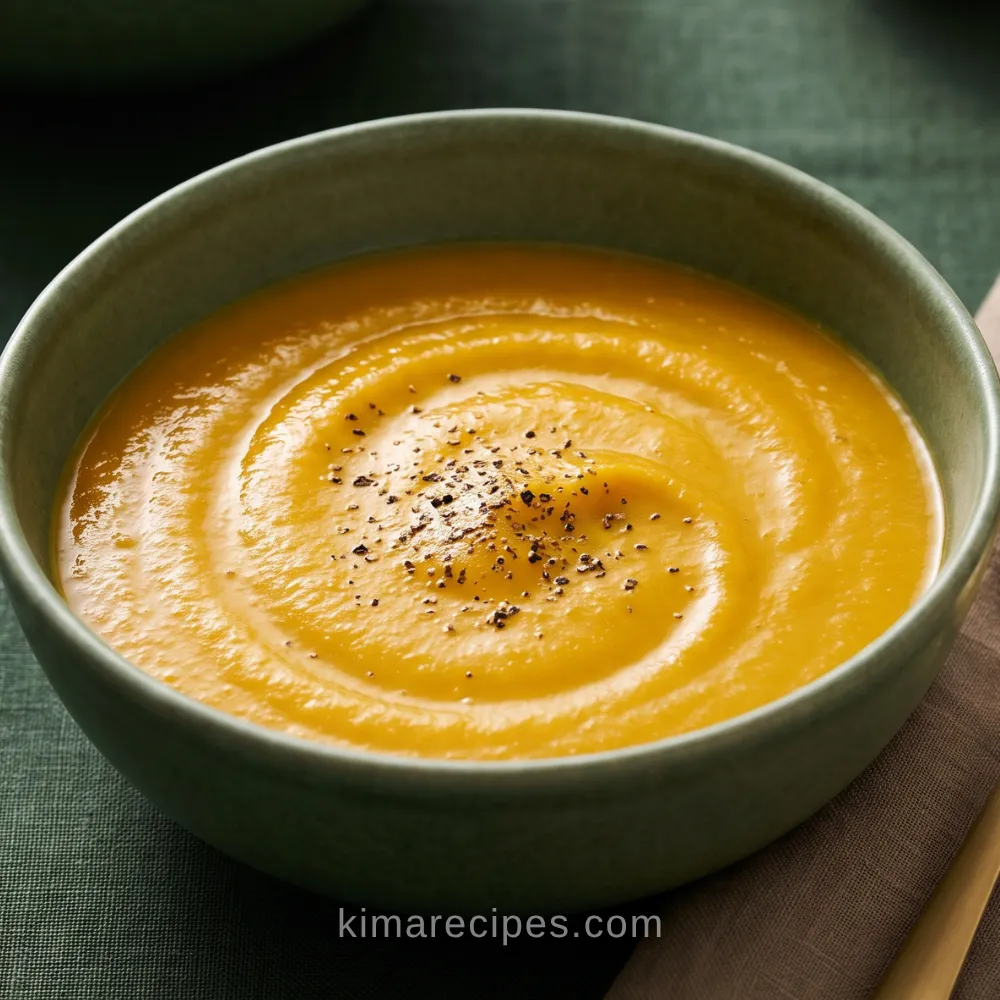
Butternut Squash Soup
This creamy Butternut Squash Soup blends tender squash, potatoes, carrots, celery, and onion into a smooth and comforting fall soup. It is easy to prepare in one pot and can be customized with curry powder, rosemary, or your favorite seasonal spices.
Ingredients
Equipment
Method
Sauté the Vegetables
- Melt the butter in a large pot over medium heat.
- Add the chopped onion, celery, carrot, cubed potatoes, and butternut squash.
- Cook the vegetables for about 5 minutes, stirring occasionally, until they begin to soften and are lightly browned.
Simmer the Soup
- Pour in enough chicken stock to completely cover the vegetables. Reserve any remaining stock for adjusting the consistency later.
- Increase the heat to medium-high and bring the soup to a boil.
- Reduce the heat to low, cover the pot, and simmer for about 40 minutes, or until the squash, potatoes, and remaining vegetables are very tender.
Blend the Soup
- Working in batches if necessary, carefully transfer the soup to a blender and process until completely smooth. Alternatively, blend the soup directly in the pot with an immersion blender.
- When using a countertop blender, do not overfill it. Remove or loosen the center cap and cover the opening with a folded kitchen towel so steam can escape safely.
Adjust and Serve
- Return the blended soup to the pot.
- Stir in as much of the remaining chicken stock as needed to reach your preferred consistency.
- Season with salt and freshly ground black pepper. Add curry powder, rosemary, or other fall spices, if desired.
- Warm the soup over low heat if needed, then ladle it into bowls and serve hot.
Notes
- Squash preparation: Peel the butternut squash, scoop out the seeds, and cut the flesh into similarly sized cubes so it cooks evenly.
- Roasted squash option: For a deeper and slightly caramelized flavor, roast the cubed squash at 400°F (200°C) for approximately 30 minutes before adding it to the soup.
- Consistency: Begin with only enough stock to cover the vegetables. Add the reserved stock after blending until the soup reaches your desired thickness.
- Seasoning variations: Curry powder, rosemary, sage, nutmeg, ginger, or pumpkin pie spice may be added according to taste.
- Vegetarian option: Replace the chicken stock with vegetable stock.
- Blender safety: Hot soup expands in a blender. Blend in small batches and allow steam to escape.
- Storage: Refrigerate cooled soup in an airtight container for up to 4 days.
- Freezing: Freeze the cooled soup in a freezer-safe container for up to 3 months, leaving room for expansion.
- Reheating: Reheat gently on the stovetop over medium-low heat, stirring occasionally. Add a splash of stock if the soup has become too thick.