The Best Fluffy Pancakes recipe you will fall in love with. Full of tips and tricks to help you make the best pancakes.

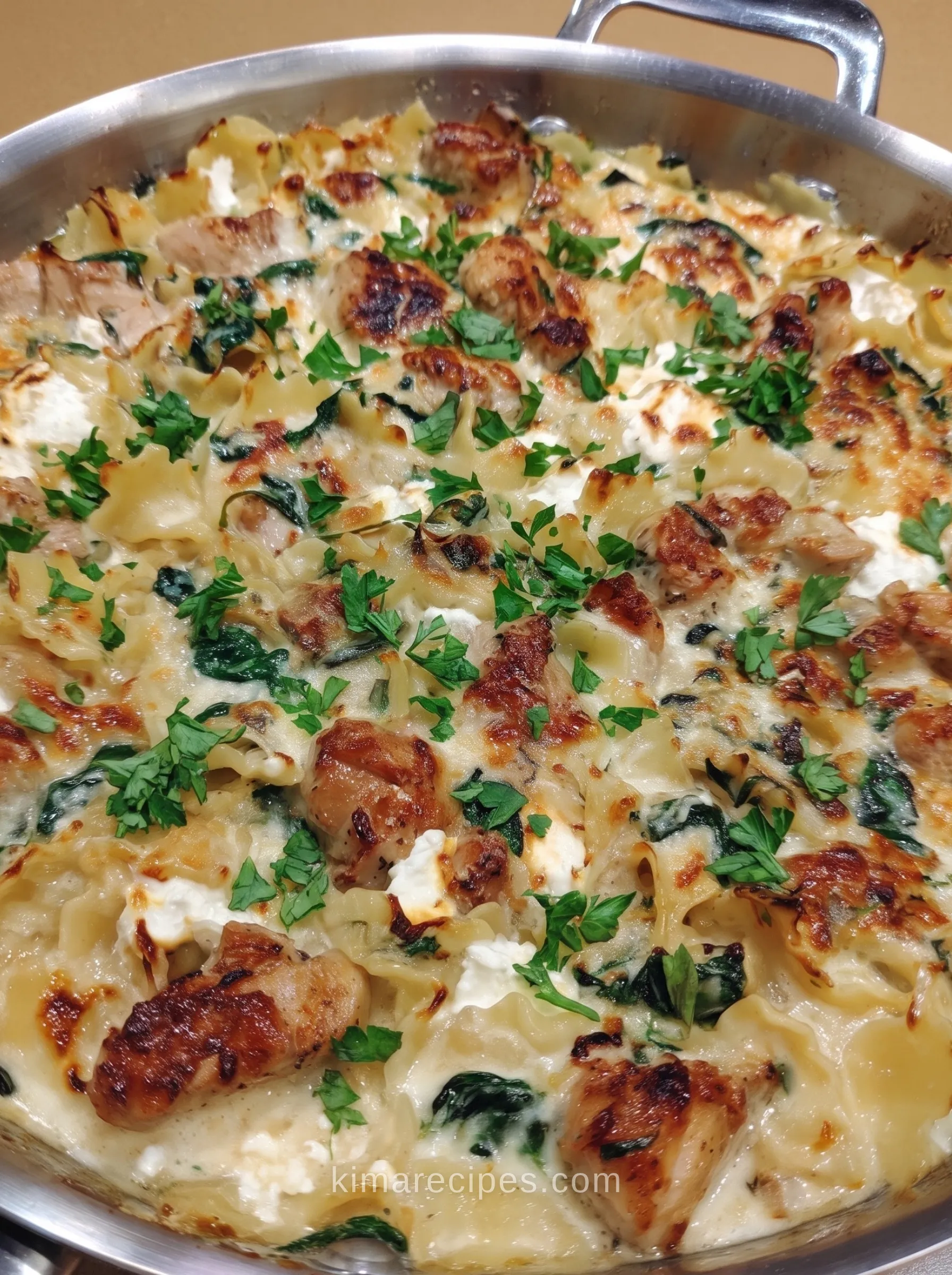
My family asks for white lasagna the minute the weather turns cold, so this white chicken lasagna skillet gets made a lot in my kitchen. The baked version I used to make took close to two hours. It also needed a pot for the noodles, a saucepan for the béchamel, and a 9×13 that had to soak overnight. Not a Wednesday dinner.
So one rainy Wednesday, I pushed the whole thing into my deep 12-inch stainless skillet and hoped. After three rounds of testing, this is the version that stayed. Broken lasagna noodles cook right in a garlic cream sauce with seared chicken thighs and a few handfuls of spinach. Then spoonfuls of lemony ricotta go on top, the way a real lasagna layer would. Finally, a quick trip under the broiler and five minutes of rest, and it’s done.
It takes about 50 minutes start to finish. Also, there’s only one pan in the sink.
Why This White Chicken Lasagna Skillet Works
The chicken gets a real sear
The browned bits stuck to the pan after searing are where most of the flavor comes from. Later, the onion and broth lift them right back into the sauce. However, if you skip the sear and toss raw chicken into the liquid, the sauce tastes like boxed pasta. I know because my first test went exactly that way.
The noodles cook in the sauce on purpose
Lasagna noodles release starch as they soften. In a pot of boiling water, that starch goes down the drain. Here, instead, it stays in the skillet and thickens the sauce for you. That’s why the whole recipe needs only 3 tablespoons of flour. In fact, pre-boiled noodles leave you with a thin, soupy pan.
Flour keeps the milk stable
Milk that simmers for 13 minutes with no thickener can curdle at the edges of the pan. So the flour cooks in butter first, and then the liquid goes in. As a result, the milk has something to hold onto. It also means you don’t need heavy cream, so the dish stays rich without sitting like a brick.
Ricotta goes on top, never stirred in
On my first try, I stirred the ricotta straight into the simmering sauce. It vanished, turned the sauce faintly grainy, and the whole thing ate like chicken Alfredo. When you dollop it on top instead, the broiler warms it into soft, creamy pockets. That’s the bite that makes it taste like lasagna.
A pinch of nutmeg
Nutmeg is the classic béchamel spice. It’s also the quiet reason this reads as lasagna instead of creamy chicken pasta. You won’t taste it directly, but you’ll notice when it’s missing.
The rest is part of the recipe
Right out of the broiler, the sauce looks too loose. That’s good, because it sets as it cools for five minutes. With my second batch, I kept simmering until it looked thick in the pan. After resting, it had turned gluey. So pull it while it’s still looser than you want.
Ingredients
For the chicken
- 1½ lb boneless, skinless chicken thighs, cut into ¾-inch pieces
- 1 tablespoon olive oil
- ½ teaspoon salt
- ½ teaspoon black pepper
For the sauce and noodles
- 3 tablespoons unsalted butter
- 1 small yellow onion, finely diced
- 4 garlic cloves, minced
- 1 teaspoon Italian seasoning
- ¼ teaspoon red pepper flakes (optional)
- 3 tablespoons all-purpose flour
- 3 cups low-sodium chicken broth, plus ½ cup extra on standby
- 1½ cups whole milk
- ½ teaspoon salt
- ⅛ teaspoon ground nutmeg
- 10 regular lasagna noodles (about 9 oz), broken into 2-inch pieces
- 4 cups baby spinach, lightly packed
- ½ cup freshly grated Parmesan
For the ricotta topping
- 1 cup whole-milk ricotta
- ¼ cup freshly grated Parmesan
- 1 teaspoon lemon zest
- 1 tablespoon chopped fresh parsley
- Pinch of salt
To finish
- 1½ cups shredded low-moisture mozzarella
- 1 tablespoon chopped fresh parsley or basil
Equipment: You need a 12-inch skillet with sides at least 2½ inches deep, and a lid. A 5-quart braiser also works. If you want to broil the top, the pan should be oven-safe.
How to Make White Chicken Lasagna Skillet
Prep and sear
- Prep everything first. Put the lasagna noodles in a zip-top bag and snap them into roughly 2-inch pieces through the bag. That way, the shards stay off your counter. Also, keep the little crumbs at the bottom, because they help thicken the sauce. Next, pat the chicken dry, cut it into ¾-inch pieces, and toss it with ½ teaspoon salt and the pepper. Then stir together the ricotta, ¼ cup Parmesan, lemon zest, 1 tablespoon parsley, and a pinch of salt. Finally, move an oven rack about 6 inches below the broiler.
- Sear the chicken. Heat the olive oil in the skillet over medium-high until it shimmers. Then add the chicken in a single layer. Leave it alone for 3 minutes, until the bottoms turn golden. After that, stir and cook 2 minutes more. The chicken won’t be fully cooked yet, and that’s what you want. Move it to a plate.
Build the sauce
- Soften the onion. Lower the heat to medium and melt the butter. Add the onion and cook about 4 minutes. While it softens, scrape up the browned bits from the chicken. Then add the garlic, Italian seasoning, and red pepper flakes, and stir for 30 seconds until the garlic smells strong.
- Cook the flour. Sprinkle the flour over the onions and stir constantly for 1 minute. It’s ready when no dry streaks remain and it smells faintly toasty.
- Add the liquid. First, pour in about 1 cup of the broth while stirring, and work out any lumps. Then add the remaining 2 cups broth, the milk, ½ teaspoon salt, and the nutmeg. Bring it to a simmer, and scrape the bottom of the pan as it heats.
Cook the noodles
- Simmer the noodles. Add the broken noodles and press them under the liquid with a spoon. Also, pull apart any pieces that stack together. When it returns to a gentle simmer, cover the pan and turn the heat to medium-low. Cook for 13 minutes, but stir every 3 minutes and scrape the corners each time. The noodles are ready when they’re tender with a slight bite. If the liquid drops below the noodles before then, add the standby broth ¼ cup at a time.
- Finish the filling. Stir the chicken and its plate juices back into the skillet. Then cook uncovered for 3 minutes, until the thickest piece reaches 165°F (74°C). Next, add the spinach a handful at a time, since it wilts in about a minute. Turn off the heat and stir in ½ cup Parmesan. At this point, the sauce should look like loose gravy.
Top, broil, and rest
- Top and broil. Drop the ricotta mixture over the top in 8 to 10 spoonfuls. Then scatter the mozzarella around and over them. Broil for 3 to 4 minutes, until bubbling and spotted brown. Don’t walk away, because broilers vary a lot. If your skillet isn’t oven-safe, cover it instead. Then set it over low heat for 4 to 5 minutes until the cheese melts.
- Rest, then serve. Let it sit for 5 minutes so the sauce can set. Finally, scatter the parsley or basil over the top and scoop it out with a big spoon.
Dinner • American
White Chicken Lasagna Skillet
Broken lasagna noodles cooked right in a garlic cream sauce with seared chicken thighs and spinach, topped with lemony ricotta dollops and broiled mozzarella. Makes 6 servings.
Ingredients 24 items
- For the Chicken
- For the Sauce and Noodles
- For the Ricotta Topping
- To Finish
Instructions 9 steps
-
1
Prep everything
Snap the lasagna noodles into 2-inch pieces inside a zip-top bag, keeping the crumbs. Toss the chicken pieces with 1/2 tsp salt and the pepper. Stir together the ricotta, 1/4 cup Parmesan, lemon zest, 1 tbsp parsley, and a pinch of salt, and set an oven rack about 6 inches below the broiler.
-
2
Sear the chicken
Heat the olive oil in a 12-inch deep skillet over medium-high. Sear the chicken in one layer for 3 minutes without moving it, then stir and cook 2 minutes more. Move it to a plate; it will finish cooking later.
-
3
Soften the onion
Lower the heat to medium, melt the butter, and cook the onion about 4 minutes, scraping up the browned bits. Add the garlic, Italian seasoning, and red pepper flakes and stir for 30 seconds.
-
4
Cook the flour
Sprinkle the flour over the onions and stir constantly for 1 minute, until no dry streaks remain.
-
5
Build the sauce
Stir in 1 cup of the broth and work out any lumps, then add the remaining 2 cups broth, the milk, 1/2 tsp salt, and the nutmeg. Bring to a simmer, scraping the bottom of the pan.
-
6
Cook the noodles
Add the broken noodles, press them under the liquid, and separate any that stack. Cover and simmer on medium-low for 13 minutes, stirring every 3 minutes and scraping the corners. Add standby broth 1/4 cup at a time if the liquid drops below the noodles.
-
7
Finish the filling
Stir the chicken and its juices back in and cook uncovered 3 minutes, until it reaches 165°F (74°C). Wilt in the spinach a handful at a time, then turn off the heat and stir in 1/2 cup Parmesan. The sauce should look loose.
-
8
Top and broil
Dollop the ricotta mixture over the top in 8 to 10 spoonfuls and scatter the mozzarella around them. Broil 3 to 4 minutes until bubbling and spotted brown. For a skillet that is not oven-safe, cover and heat on low 4 to 5 minutes until melted.
-
9
Rest and serve
Let the skillet rest 5 minutes so the sauce sets. Sprinkle with parsley or basil and serve.
Tips & Substitutions
Use a 12-inch skillet with sides at least 2.5 inches deep; a 10-inch pan is too small and the noodles cook unevenly.
Stir every 3 minutes while the noodles cook and scrape the corners, where they stick first.
Dollop the ricotta on top instead of stirring it in, or it melts into the sauce and turns it grainy.
The sauce should look loose when it comes out of the broiler. It thickens during the 5-minute rest.
Use whole-milk ricotta and low-sodium broth; part-skim ricotta weeps water and regular broth makes it too salty.
No-boil noodles: cut the broth to 2.5 cups and start checking at 6 minutes.
Reheat with 2 tablespoons milk or broth per serving. Not recommended for freezing.
Nutrition Facts
641 kcal / serving
Protein48g
Carbs42g
Fat30g
Fiber2g
Tips for the Best Skillet White Lasagna
Stir every 3 minutes, not “occasionally.” During one test, I walked away for 7 minutes. When I came back, a mat of noodles had welded itself to the bottom near the handle, where my burner runs hottest. So watch the corners and edges, since that’s where they stick first.
A 10-inch skillet is too small for this amount. The noodles pile three deep, so the middle layer stays chalky while the bottom scorches. Instead, use a 12-inch pan with tall sides, or a braiser.
Thighs beat breasts here. Breasts still work, but sear them only 3 minutes total, because they finish cooking in the sauce. When I seared them the full 5 minutes, they came out dry.
Use whole-milk ricotta only. Part-skim ricotta weeps water under the broiler. As a result, you get little puddles around each dollop.
Stick with low-sodium broth. Between the Parmesan and mozzarella, there’s already plenty of salt. In fact, one batch made with regular broth was too salty to finish. So taste at step 7 and adjust then.
Grate the Parmesan for the sauce yourself. The bagged kind has a coating to stop clumping, but in a hot sauce it clumps anyway. However, pre-shredded mozzarella on top is fine.
Variations
Mushroom. After the chicken comes out, brown 8 oz sliced cremini in the empty pan for about 5 minutes. Then carry on with the butter and onion. It’s worth the extra step, and it’s now the version I make most often.
Rotisserie chicken. Use about 3 cups of shredded meat and skip step 2, so you start with the butter and onion. Then stir the chicken in at step 7 and just heat it through for 2 minutes. Since you lose the browned bits from searing, the sauce comes out a little milder.
Broccoli instead of spinach. Add 2 cups of small florets to the skillet during the last 5 minutes of noodle cooking.
Pesto ricotta. Stir 2 tablespoons of basil pesto into the ricotta topping. If you do, though, leave out the lemon zest.
Gluten-free. Use gluten-free lasagna noodles and a 1:1 gluten-free flour. Also, start checking the noodles at 8 minutes, because they go from firm to mushy fast.
The one I’d skip: jarred Alfredo. I tested a shortcut with a jar of Alfredo in place of the homemade sauce. It tasted salty and flat, and it also separated under the broiler. Since the pan sauce takes only about 6 minutes, make that instead.
Make-Ahead, Storage & Reheating
What works ahead: You can break the noodles, dice the onion, and mix the ricotta topping up to a day early. Just keep the ricotta covered in the fridge. Likewise, you can cut and season the chicken the night before.
What doesn’t: Don’t cook the whole skillet hours before guests arrive. The noodles keep drinking the sauce, so by dinner you have a solid block. This one gets eaten the same hour it’s cooked.
Fridge: Let it cool, then store it in an airtight container for up to 4 days.
Reheating: The noodles soak up most of the sauce overnight, so you need to add liquid back. For each serving, add 2 tablespoons of milk or broth and cover. Then microwave at 50% power for 2½ to 3 minutes, stirring halfway. On the stove, use a covered pan over low heat with the same splash of liquid. For a bigger batch, cover the dish with foil and pour ¼ cup broth around the edges. Then warm it at 350°F (175°C) for about 20 minutes.
Freezer: I don’t freeze this, because the noodles turn soft and the milk sauce goes grainy when it thaws. It’s edible, but it’s not something I’d serve.
FAQ
Do you have to boil lasagna noodles for skillet lasagna?
No. Regular lasagna noodles cook right in the sauce in about 13 minutes, covered. Because the starch they release thickens the sauce, boiling them first would leave the skillet thin and soupy.
Can I use no-boil (oven-ready) lasagna noodles?
Yes, but make two changes. First, cut the broth to 2½ cups. Then start checking the noodles at 6 minutes, since they’re thinner and cook in 6 to 8. Honestly, though, I prefer regular noodles here. Oven-ready ones go floppy and lose the ruffled edges that grab the sauce.
Can I use rotisserie chicken in white chicken lasagna skillet?
Yes. Use about 3 cups of shredded meat, and stir it in at the end just to heat through.
Why is my skillet lasagna watery?
Most of the time, it went straight from the broiler to the plate. When you give it the full 5 minutes of rest, it thickens noticeably. If it’s still loose after resting, the noodles probably cooked at too low a heat to release their starch. So next time, keep a steady simmer. You can also uncover the pan for the last 2 to 3 minutes of noodle cooking to let some liquid cook off.
Dry is the opposite problem. In that case, a pan wider than 12 inches or heat that’s too high cooks the liquid off before the noodles soften. To fix it, add warm broth ¼ cup at a time until the noodles finish.
Can I make it without ricotta?
You can, but then it’s creamy chicken pasta, not lasagna. Still, whole-milk cottage cheese blended smooth is the closest stand-in.
What size skillet do I need?
You need a 12-inch skillet with sides at least 2½ inches tall, or a 5-quart braiser. In a smaller pan, the noodles stack too deep to cook evenly. On the other hand, a much wider pan cooks the sauce down before the noodles are ready.
Can you freeze white chicken lasagna skillet?
I wouldn’t, because the texture suffers too much. Instead, it keeps for 4 days in the fridge.
Closing Thoughts
Put the skillet straight on the table on a trivet and let everyone scoop. In my house, the corners where the mozzarella browns against the hot pan always go first. On the side, a plate of arugula with lemon juice and shaved Parmesan cuts through all that cream. I tried garlic bread with it once, but nobody finished it, because this dish is already plenty.
Also, if you end up with half a box of lasagna noodles afterward, keep it. After all, ten noodles is exactly one more skillet.