The Best Fluffy Pancakes recipe you will fall in love with. Full of tips and tricks to help you make the best pancakes.

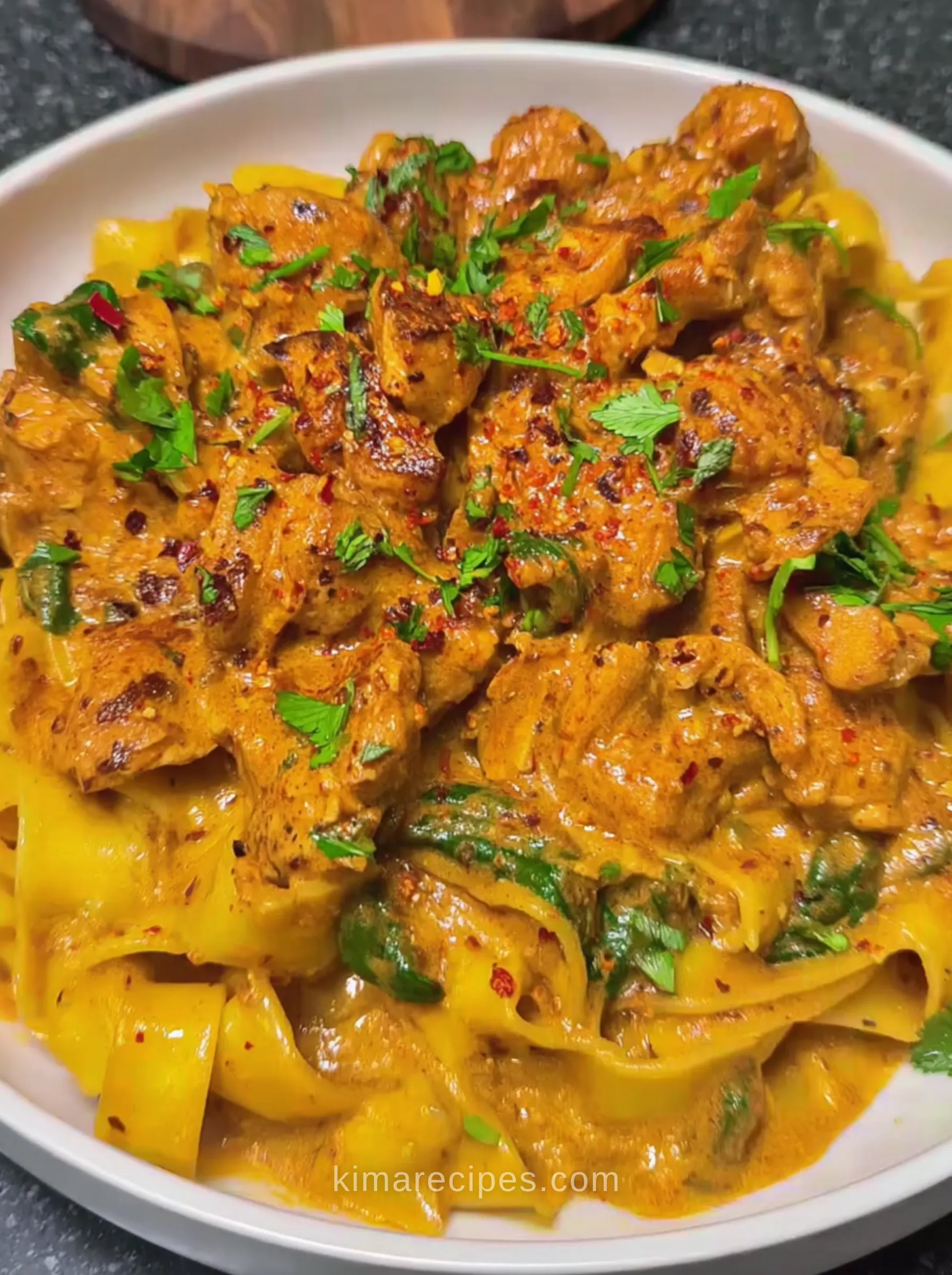
It started with leftovers. Half a can of coconut milk in the fridge from a curry night, a bag of pappardelle, and a pack of chicken thighs that needed using before Thursday. Curry chicken pasta couldn’t be that hard, I figured. Everything in one pot, simmer, done.
The first pot was edible. Barely. The sauce went grainy at the edges, a slick of yellow oil floated on top, and the curry tasted like dust. Flat and a little bitter, like I’d shaken it on at the table.
Three more rounds to get it right. What I ended up with is creamy without any cream, cooks the pasta right in the sauce, and tastes closer to a mild takeout korma than anything you’d call Italian. Wide, silky ribbons, one pot, about 35 minutes. And the coconut milk goes in twice — sounds fussy, but it’s the whole reason this works.
Why This Curry Chicken Pasta Works
The curry powder gets fried before any liquid touches it. Curry powder is mostly ground seeds and roots: coriander, cumin, turmeric, fenugreek. Their flavor lives in oils that need fat and heat to wake up. Stir the powder straight into broth and it just gets wet, which is exactly the chalky taste from my first pot. Ninety seconds in butter with the tomato paste and it darkens a shade and smells toasted. Night and day.
Half the coconut milk waits. Coconut milk is fat and water held together, and that balance is fragile. Boil it hard for 10 minutes with pasta starch churning around and it can break. That’s where my oil slick came from. So the first half simmers with the pasta and flavors the noodles from the inside. The second half goes in at the very end, over low heat, and that last pour is what makes the sauce glossy. It also puts back the fresh coconut taste that a long simmer cooks off.
The chicken is seared, pulled out, then put back. Browning it first leaves sticky dark bits on the bottom of the pot. The broth lifts them up, and that’s a big chunk of the savory depth here. Then the chicken finishes in the sauce instead of overcooking on its own.
Lime goes in off the heat. Acid into bubbling coconut milk is asking for curdling. Off the heat, it just sharpens everything.
Ingredients
For the chicken
- 1½ lb (680 g) boneless, skinless chicken thighs, cut into 1-inch pieces
- 1 tsp kosher salt, plus more to taste
- 1 tsp of the curry powder (from the 2 tbsp below)
- 1 tbsp vegetable oil
For the sauce and pasta
- 2 tbsp unsalted butter
- 1 medium yellow onion, diced
- 4 garlic cloves, minced
- 1 tbsp grated fresh ginger
- 2 tbsp tomato paste
- 2 tbsp mild yellow curry powder, divided
- ¼ tsp cayenne (optional)
- 1 tsp brown sugar
- 3 cups (720 ml) low-sodium chicken broth
- 1 can (13.5 oz / 400 ml) full-fat coconut milk, shaken well, divided
- 12 oz (340 g) dried pappardelle or other wide ribbon pasta (tagliatelle and mafaldine work too)
To finish
- 2 packed cups (60 g) baby spinach
- 1 tbsp lime juice (about ½ lime)
- A handful of fresh cilantro, chopped
- ¼ tsp chili powder, for sprinkling on top
Pot: a 5½-quart Dutch oven or anything at least 3½ inches deep.
How to Make Curry Chicken Pasta
- Season the chicken. Toss the chicken with the salt and 1 teaspoon of the curry powder. Let it sit while you dice the onion.
- Sear. Heat the oil in the Dutch oven over medium-high. Add the chicken in one layer and leave it alone for 3 minutes. Flip, give it 2 more. It won’t be cooked through yet, and that’s fine. Move it to a plate.
- Soften the onion. Drop the heat to medium. Add the butter, then the onion and a pinch of salt. Cook 4 to 5 minutes, until soft and just turning gold at the edges.
- Bloom the spices. Stir in the garlic and ginger for 30 seconds. Add the tomato paste, the rest of the curry powder, and the cayenne if using. Keep stirring for 60 to 90 seconds. The paste should go from bright red to brick, and the bottom of the pot will look dark. Dark, not burnt.
- Build the liquid. Pour in the broth and scrape the bottom hard with a wooden spoon. Pour in about half the coconut milk (a little under 1 cup) and the brown sugar. Bring to a boil.
- Cook the pasta in the sauce. Add the pappardelle and push it under the liquid. If it comes in nests, use tongs to loosen the strands as they soften during the first 2 minutes. Add the chicken and any juices on the plate. Once it’s bubbling again, turn it down to a steady simmer. Cook uncovered for 8 to 10 minutes, lifting and turning the ribbons with tongs every minute or two so they don’t stick together, until the pasta is al dente and the sauce coats a spoon.
- Finish. Turn the heat to low. Stir in the rest of the coconut milk and the spinach and cook 1 to 2 minutes, just until the spinach wilts. Take the pot off the heat and stir in the lime juice. Taste. It usually wants one more pinch of salt.
- Rest, then serve. Give it 3 minutes. The sauce tightens up as it sits. Scatter cilantro over the top, then dust with the chili powder. Light hand — you want red flecks, not a coating.
Prep time: 10 minutes | Cook time: 25 minutes | Total time: 35 minutes | Servings: 4
Dinner • Fusion
Curry Chicken Pasta
Wide ribbon pasta and seared chicken thighs simmered in one pot in a creamy coconut curry sauce, with half the coconut milk saved for a glossy finish. Makes 4 servings.
Ingredients 18 items
- For the Chicken
- For the Sauce and Pasta
- To Finish
Instructions 8 steps
-
1
Season the chicken
Toss the chicken with the salt and 1 teaspoon of the curry powder. Let it sit while you dice the onion.
-
2
Sear the chicken
Heat the oil in a 5 1/2-quart Dutch oven over medium-high. Sear the chicken in one layer for 3 minutes without moving it, flip, and cook 2 minutes more. Move it to a plate; it will finish cooking later.
-
3
Soften the onion
Lower the heat to medium. Add the butter, the onion, and a pinch of salt. Cook 4 to 5 minutes, until soft and just turning gold at the edges.
-
4
Bloom the spices
Stir in the garlic and ginger for 30 seconds. Add the tomato paste, the remaining curry powder, and the cayenne, and stir constantly for 60 to 90 seconds, until the paste turns brick-colored.
-
5
Build the liquid
Pour in the broth and scrape the bottom of the pot well. Add about half the coconut milk (a little under 1 cup) and the brown sugar, then bring to a boil.
-
6
Cook the pasta in the sauce
Add the pappardelle, push it under the liquid, and loosen any nests with tongs. Add the chicken and its juices. Simmer uncovered for 8 to 10 minutes, lifting and turning the ribbons with tongs every minute or two, until the pasta is al dente and the sauce coats a spoon.
-
7
Finish the sauce
Turn the heat to low. Stir in the remaining coconut milk and the spinach and cook 1 to 2 minutes, until the spinach wilts. Remove from the heat, stir in the lime juice, and season with salt.
-
8
Rest and serve
Let the pasta rest for 3 minutes so the sauce thickens. Top with cilantro and a light dusting of chili powder, then serve.
Tips & Substitutions
Use a pot at least 3.5 inches deep; a 12-inch skillet overflows once the pasta goes in.
Pappardelle takes about 9 minutes in the sauce, longer than the bag says. Start tasting at 7.
Turn the ribbons with tongs every minute or two so they do not stick together.
Penne or rotini also work; simmer 12 to 14 minutes.
Cook uncovered so the sauce reduces.
Use low-sodium broth; many curry powders already contain salt.
If you use Madras curry powder, skip the cayenne.
Leftovers keep 4 days in the fridge. Reheat with 2 to 3 tablespoons of water or broth per serving. Do not freeze.
Dust the chili powder on lightly at the end; it is for color and a little kick, not heat.
Nutrition Facts
840 kcal / serving
Protein48g
Carbs74g
Fat39g
Fiber5g
Tips
Check your pot before you start. My 12-inch skillet looked big enough. It wasn’t. Once the pasta went in, the broth was sitting right at the rim, and every stir sent some over the side onto the burner. Deep pot. Not wide.
Tongs, not a spoon. A spoon just shoves the ribbons around in one big sheet, and they glue together where they overlap. Lift, shake, drop. Every minute or so.
The pappardelle bag said 7 minutes. In the sauce it took 9. Pasta cooks slower in thick, fatty liquid than in plain boiling water, so start tasting at 7 and ignore the bag.
Don’t put a lid on it. Tried that once to “speed things up” and got soup with noodles floating in it. The sauce needs to reduce while the pasta cooks.
If the sauce gets too thick before the pasta’s done (usually means the simmer was too aggressive), splash in ¼ cup of water. Looks a bit loose when the ribbons are done? Leave it. Wide pasta throws off a lot of starch, and the sauce tightens up during the rest.
Use low-sodium broth. A lot of curry powder blends already have salt in them, and the liquid reduces by more than half. The version I made with regular broth was borderline salty by the time it hit the bowl.
Which Curry Powder to Use
Most recipes just say “curry powder” and move on. But it changes this dish more than any other ingredient. I test with a plain mild yellow curry powder, the regular supermarket kind. It gives a warm, rounded flavor that kids will eat.
Madras curry powder is hotter and more chili-forward. Good here, but skip the cayenne if you use it.
And check how old yours is. If the jar’s been open more than a year and barely smells of anything when you rub a pinch between your fingers, blooming won’t save it. The pasta will taste flat no matter what you do.
Thai curry paste is not a 1:1 swap for powder. Different thing entirely. See below.
Variations
- Thai red curry version: Swap the curry powder for 3 tablespoons of red curry paste and drop the tomato paste. Bloom the paste in the butter the same way. Brighter and more lemongrass-y, honestly a different dinner, but a good one.
- Chickpeas instead of chicken: One 15-oz can, drained, stirred in with the pasta. Use vegetable broth. It works.
- Penne or rotini: Both work if you don’t have ribbons. Simmer 12 to 14 minutes instead, and a spoon is fine here.
- Spaghetti: Skip it. Thin strands went soft at the edges of the pot while the middle was still stiff, and they don’t carry this thick sauce the way flat ribbons do.
- Light coconut milk: I wouldn’t do this again. The sauce stayed thin and tasted watery even after extra simmering, and it never got that glossy finish at the end.
Make-Ahead and Storage
Don’t make the whole thing ahead for a dinner. The ribbons keep drinking the sauce as they sit, and by the next day it’s more pasta bake than saucy pasta. Still tasty, just not the same dish.
What you can do ahead: cut and season the chicken up to a day early and keep it covered in the fridge. Dice the onion, mince the garlic, grate the ginger. That cuts the active time to about 25 minutes.
Leftovers keep 4 days in a sealed container in the fridge. Reheat on the stove over low heat with 2 to 3 tablespoons of water or broth per serving, stirring until it loosens. In the microwave, add the same splash, cover, and heat at half power.
Freezing — no. The pasta goes soft and the coconut sauce turns grainy when it thaws.
FAQ
Can I use chicken breast instead of thighs in curry chicken pasta?
Yes, but I’d stick with thighs. Breast meat dries out over a 10-minute simmer, and that’s exactly what happened when I tried it. If breast is what you have, cut it into bigger 1½-inch pieces, sear it the same way, and only add it back for the last 4 minutes of the pasta’s cooking time.
What is the best curry powder for curry chicken pasta?
A mild yellow curry powder. It’s balanced, not very hot, and fresh enough jars bloom beautifully in butter.
Why did my coconut curry sauce split or turn oily?
Sometimes you can pull it back. Take the pot off the heat and stir in a few tablespoons of cold coconut milk or water, fast. Next time, keep the simmer steady instead of violent, hold back half the coconut milk for the end, and add the lime off the heat
Can I make curry chicken pasta without coconut milk?
You can. Use heavy cream in the same amounts and split it the same way. It ends up tasting more like a butter chicken pasta, rich and a bit heavier. Good! But I like the coconut version better, because the slight sweetness balances the spices in a way cream doesn’t.
Is curry chicken pasta spicy?
Not as written. Warm, not hot. The chili powder on top is mostly there for color and a little smoky kick.
Why is my leftover curry pasta dry?
The ribbons keep absorbing sauce in the fridge. Add a splash of water or broth when you reheat and it comes right back.
Closing Thoughts
Serve it with something cold and crunchy. A quick cucumber salad works: thin slices, a squeeze of lime, salt, a little chopped cilantro. It cuts through all that coconut richness. And skip the garlic bread. Warm naan, torn up and used to mop the sauce from the bottom of the bowl, is the move here.