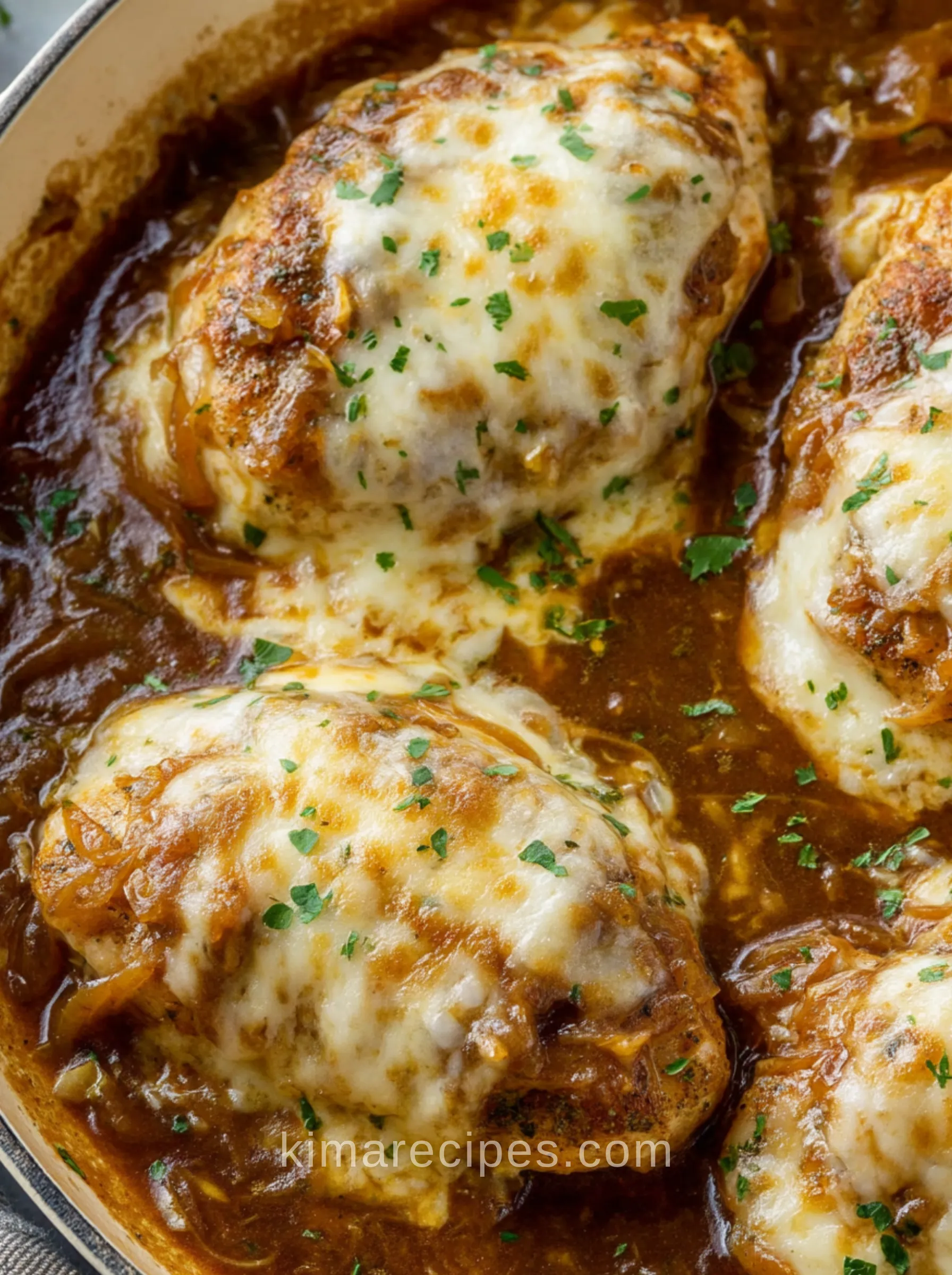
Ingredients
Equipment
Method
Prepare the Chicken
- Slice each chicken breast horizontally into 2–3 thinner pieces.
- Place the chicken pieces between sheets of plastic wrap and gently pound them to approximately 1/4-inch thickness.
- Pat the chicken dry and season both sides with salt, black pepper, garlic powder, and Italian seasoning.
- Combine the 1/2 cup flour and Parmesan cheese in a shallow bowl. Dredge each chicken piece in the mixture and shake off the excess.
Sear the Chicken
- Heat 3 tablespoons olive oil and 1 tablespoon butter in a large skillet over medium-high heat.
- Sear the chicken for approximately 3 minutes per side, or until a golden crust forms. Work in batches if necessary and add a little additional olive oil if the skillet becomes dry.
- Transfer the seared chicken to a plate and loosely tent with foil. The chicken does not need to be fully cooked at this stage because it will finish cooking in the oven.
Caramelize the Onions
- Slice the onions evenly into approximately 1/4-inch slices.
- In the same skillet, melt 2 tablespoons unsalted butter with 1 tablespoon olive oil over medium heat.
- Scrape up the browned chicken bits from the bottom of the skillet to incorporate their flavor into the sauce.
- Add the sliced onions and toss until evenly coated with the butter and oil. Cook for 5 minutes to begin softening them.
- Add the soy sauce, rosemary, thyme, and sage. Stir well.
- Cover the skillet, reduce the heat to low, and cook for 30 minutes, stirring occasionally.
- Remove the lid, increase the heat to medium, and cook for another 10 minutes, stirring frequently, until the onions are deeply softened and caramelized.
Prepare the French Onion Sauce
- Preheat the oven to 475°F (245°C).
- Add the minced garlic and dry white wine to the onions.
- Cook uncovered for approximately 10 minutes, or until the wine is almost completely reduced.
- Sprinkle the 2 tablespoons flour over the onions and toss until evenly coated. Cook for 1–2 minutes to remove the raw flour taste.
- Gradually add the chicken broth, beef broth, and beef bouillon, stirring until combined.
- Increase the heat to medium-high and bring the sauce to a gentle boil. Cook for 3–5 minutes, stirring occasionally, until slightly thickened and reduced.
Assemble and Bake
- Remove the skillet from the heat. If the skillet is not oven-safe, transfer the onion sauce to an oven-safe casserole dish.
- Nestle the seared chicken pieces into the onion sauce.
- Top evenly with the shredded mozzarella, provolone, or Gruyere cheese.
- Bake at 475°F for 15–20 minutes, or until the cheese is melted, bubbling, and beginning to brown. Make sure the thickest part of the chicken reaches 165°F (74°C).
Serve
- Remove from the oven and garnish with fresh thyme, if desired. Serve hot with plenty of caramelized onion sauce spooned over the chicken.
Notes
- Pounding the chicken: Using the textured side of a meat tenderizer can make flattening the chicken quicker and more even.
- Searing: Adjust the heat as needed while browning the chicken and add a small amount of extra olive oil if the skillet becomes dry.
- Chicken doneness: The chicken only needs a golden crust during searing. It finishes cooking in the oven and should reach 165°F (74°C) internally before serving.
- Onions: Do not slice the onions too thin because they shrink considerably during the long caramelization process.
- Browned bits: Scraping the flavorful browned chicken remnants from the skillet adds depth to the French onion sauce.
- Wine: Chardonnay or Pinot Grigio work well. For an alcohol-free version, replace the wine with additional chicken or beef broth.
- Cheese: Mozzarella creates a mild, stretchy topping, while provolone or Gruyere provides a more traditional French onion flavor.
- Bouillon: Broth, soy sauce, Parmesan, and bouillon all contribute salt, so taste the finished sauce before adding additional salt.
- Storage: Refrigerate cooled leftovers in an airtight container for up to 3–4 days.
- Reheating: Reheat gently in a covered skillet or baking dish until the chicken is hot throughout. Add a splash of broth if the sauce becomes too thick.