The Best Fluffy Pancakes recipe you will fall in love with. Full of tips and tricks to help you make the best pancakes.

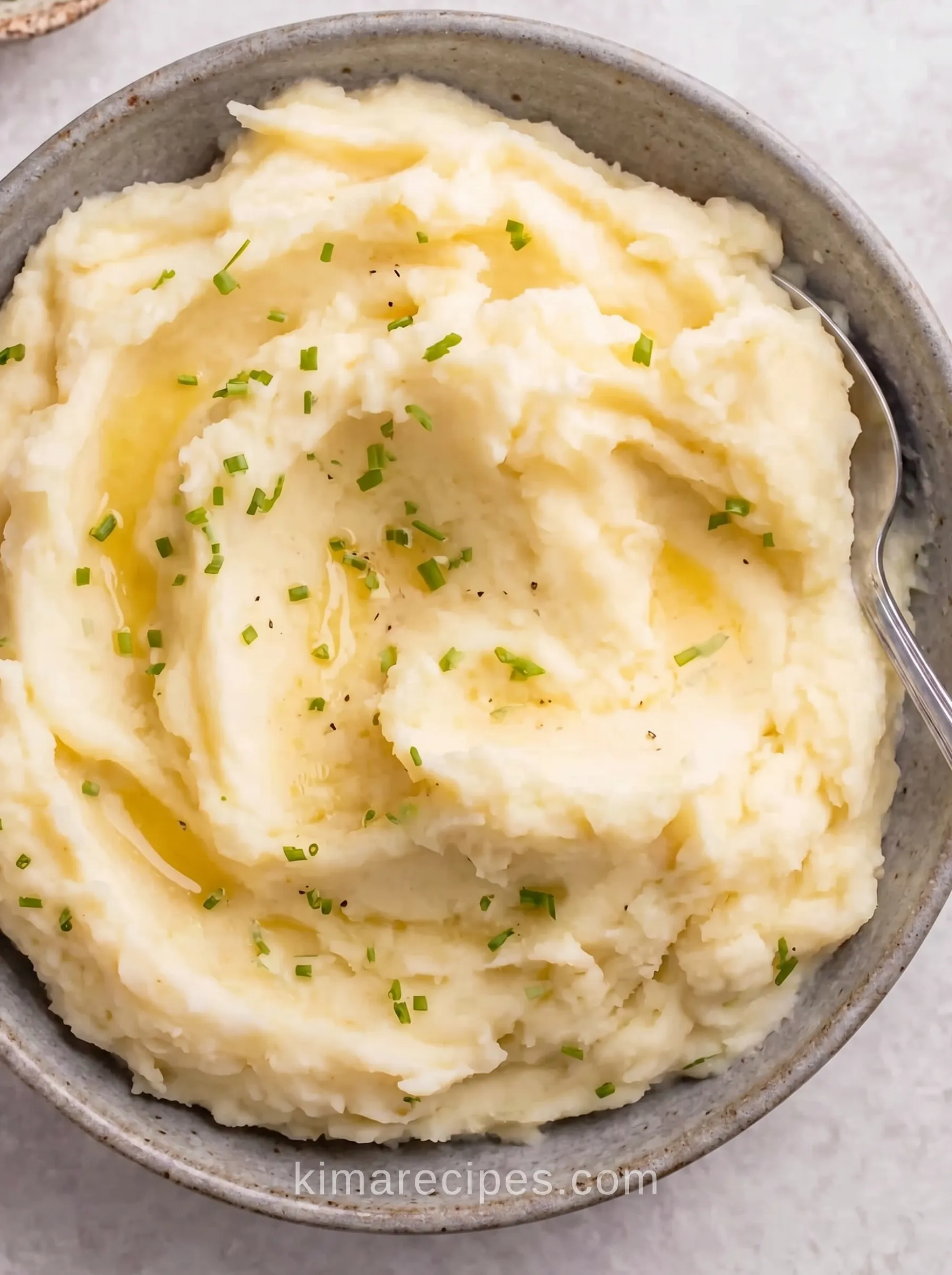
The first time I baked my potatoes instead of boiling them, I almost didn’t believe the texture difference. Boiled potatoes soak up water they don’t need. Baked ones stay dry inside, which is the entire secret to why this version holds up in the fridge for two days without turning into wallpaper paste.
Thanksgiving is the obvious use case here, but honestly I make these any week I know Tuesday is going to be a mess. Scoop, fold, refrigerate, forget about it. Someone else can handle the reheating.
Why This Works
Boiling potatoes for mash means the flesh is already waterlogged before you add a drop of cream. That extra moisture is exactly what turns leftover mashed potatoes gluey and dense once they’ve been chilled and reheated — the starches over-hydrate, then seize up in the fridge. Baking the potatoes whole avoids that entirely. The skins act as a barrier, so the inside stays dry and starchy, and dry starch is what takes on cream well without breaking down.
The order matters too. [PLACEHOLDER: a specific batch where you tried adding cold cream, or scooping the potatoes after they’d cooled, and it went wrong.] Scoop the potatoes while they’re still too hot to touch comfortably, and use cream that’s actively simmering, not cream you pulled cold from the fridge. Cold cream hitting hot starch tightens the mixture up fast — you get a stiff, pasty result instead of something that folds smooth. Hot cream into hot potato keeps everything loose enough to come together properly.
Ingredients
- 4-5 pounds Russet potatoes
- 2 cups heavy cream
- 8 Tablespoons unsalted butter, divided
- 1 and 3/4 teaspoons salt, plus more to taste
Instructions
- Preheat the oven to 450°F and set a rack in the middle.
- Place the potatoes directly on the oven rack — no baking sheet needed — and bake for 50-60 minutes, until they’re extremely soft when pressed with tongs.
- Just before the potatoes come out, combine the cream and 6 tablespoons of the butter in a small saucepan over medium heat.
- Bring it to a simmer, stirring occasionally so it doesn’t scorch on the bottom.
- Pull the potatoes out and split each one in half lengthwise right away. Don’t let them sit.
- Scoop the tender flesh into the bowl of a stand mixer. If there’s tough flesh near the skin that won’t scoop easily, leave it behind — it’ll only cause lumps.
- Once everything’s scooped, mix the flesh briefly with a fork first, then switch to the paddle attachment and beat on low until smooth. Do this while the potatoes are still hot — this step doesn’t work as well once they’ve cooled.
- Pour the simmering cream mixture in.
- Fold gently with a large spatula until smooth and light. At first it’ll look like it’s not coming together at all. Keep folding.
- Stir in the salt, then taste and adjust.
- Transfer to a serving bowl or your slow cooker’s insert, cover tightly with plastic wrap, and refrigerate for up to 2 days.
Slow Cooker Warming Option
- Remove the plastic wrap and warm the potatoes with the remaining 2 tablespoons of butter on top.
- Warm on low for 3-4 hours, or high for 1-2 hours — this depends a lot on how hot your particular slow cooker actually runs, so check in on it.
- Stir occasionally, and add a splash of cream if the texture’s tightened up more than you want.
- Serve straight from the slow cooker.
Microwave Warming Option
- Poke 8-10 holes through the top of the plastic wrap with a sharp knife.
- Microwave at 75% power for about 10 minutes, stirring halfway through, until hot all the way through.
- Top with the remaining 2 tablespoons of butter and serve.
Prep Time: 20 minutes Cook Time: 1 hour Total Time: 1 hour 20 minutes Servings: 8
Tips
- Don’t skip splitting the potatoes open the second they come out of the oven. Waiting even five extra minutes traps steam inside and starts working against the dry-fleshed texture you just spent an hour baking for.
- Leave the tough bits near the skin behind when scooping. They don’t break down the same way and they’re the main source of lumps in an otherwise smooth batch.
- If your slow cooker runs hot, check the potatoes at the low end of the time range — 3 hours, not 4 — so the bottom doesn’t scorch.
Variations
Swap the cream for half-and-half if you want something a little lighter, though the texture won’t be quite as rich once it’s chilled and reheated. Roasted garlic folded in with the cream is worth trying once. Adding sour cream at the end, on the other hand, is one I wouldn’t bother repeating — it thins the mixture out in a way that doesn’t hold up after two days in the fridge.
Make-Ahead Notes
This is built to be made two days out — that’s the whole point. What doesn’t work: freezing the finished mash. The cream-butter mixture separates when it thaws, and no amount of stirring brings it back to smooth. Keep this one strictly a fridge situation, not a freezer one.
FAQ
Can I make mashed potatoes ahead of time without them getting gluey?
Yes — the key is baking the potatoes instead of boiling them, which keeps the flesh from taking on excess water before you add cream.
Why bake the potatoes instead of boiling for mash?
Boiled potatoes are already saturated with water by the time you mash them, which is a big part of why reheated mashed potatoes so often turn gummy. Baked potatoes stay dry inside, so they take on the cream mixture without the texture breaking down after a day or two in the fridge.
Can I freeze make-ahead mashed potatoes?
I wouldn’t. The cream separates on thawing and the texture never fully recovers, even with extra stirring or added cream.
How do I reheat make-ahead mashed potatoes?
Slow cooker or microwave both work. Slow cooker takes 1-4 hours depending on heat setting and how hot your unit runs; microwave is closer to 10 minutes at 75% power with a stir halfway through.
Closing Thoughts
These hold their own next to something rich like braised short ribs, since the potatoes themselves stay fairly plain and let the sauce do the work. If you’re already using the slow cooker to reheat the potatoes, it’s worth checking whether your main dish can go in the oven at the same time — one less burner to juggle on a day that’s already busy.
Make Ahead Mashed Potatoes
These ultra-creamy Make Ahead Mashed Potatoes are baked instead of boiled for rich potato flavor and an incredibly smooth, fluffy texture. Prepare them up to two days in advance, then reheat in the slow cooker or microwave for an easy holiday side dish that’s perfect for Thanksgiving, Christmas, or family dinners.
Ingredients
Equipment
Method
Prepare the Mashed Potatoes
- Preheat the oven to 450°F (230°C) and position an oven rack in the center.
- Place the Russet potatoes directly on the oven rack and bake for 50–60 minutes, or until they are extremely soft when gently pressed with tongs.
- Just before the potatoes are finished baking, combine the heavy cream and 6 tablespoons of the butter in a small saucepan over medium heat.
- Bring the cream and butter mixture to a gentle simmer, stirring occasionally.
- Remove the potatoes from the oven and immediately split each potato in half lengthwise.
- Carefully scoop the soft potato flesh from each half and transfer it to the bowl of an electric mixer. Leave behind any tough pieces of potato flesh near the skins.
- While the potatoes are still hot, briefly break up the flesh with a fork. Fit the mixer with the paddle attachment and beat on low speed until the potatoes are very smooth.
- Pour the hot cream and butter mixture into the mashed potatoes.
- Using a large spatula, gently fold the cream mixture into the potatoes until completely incorporated and the potatoes are smooth, creamy, and light.
- Stir in 1 3/4 teaspoons of salt. Taste and add additional salt as needed.
- Transfer the mashed potatoes to a serving bowl or the insert of a slow cooker. Cover tightly with plastic wrap and refrigerate for up to 2 days.
Slow Cooker Reheating Option
- Remove the plastic wrap and place the remaining 2 tablespoons of butter on top of the chilled mashed potatoes.
- Cover and warm in the slow cooker on LOW for 3–4 hours or on HIGH for 1–2 hours.
- Stir occasionally while reheating. If desired, add a small splash of heavy cream to loosen and lighten the consistency.
- Serve the mashed potatoes warm directly from the slow cooker.
Microwave Reheating Option
- Keep the mashed potatoes tightly covered with plastic wrap and use a sharp knife to poke 8–10 small holes in the top of the plastic wrap.
- Microwave at 75% power for about 10 minutes, stirring halfway through, until the mashed potatoes are hot throughout.
- Top with the remaining 2 tablespoons of butter and serve hot.
Notes
The mashed potatoes can be fully prepared up to 2 days ahead of time and refrigerated until ready to reheat.
When folding in the hot cream mixture, it may initially look like the cream will not incorporate. Continue gently folding and the mixture will become smooth and creamy.
Keep the potatoes hot while scooping and mixing them for the smoothest texture.
Slow cooker reheating times may vary depending on how hot your particular slow cooker runs.
If the potatoes become thicker after refrigeration, stir in a small splash of heavy cream while reheating until the desired consistency is reached.