The Best Fluffy Pancakes recipe you will fall in love with. Full of tips and tricks to help you make the best pancakes.

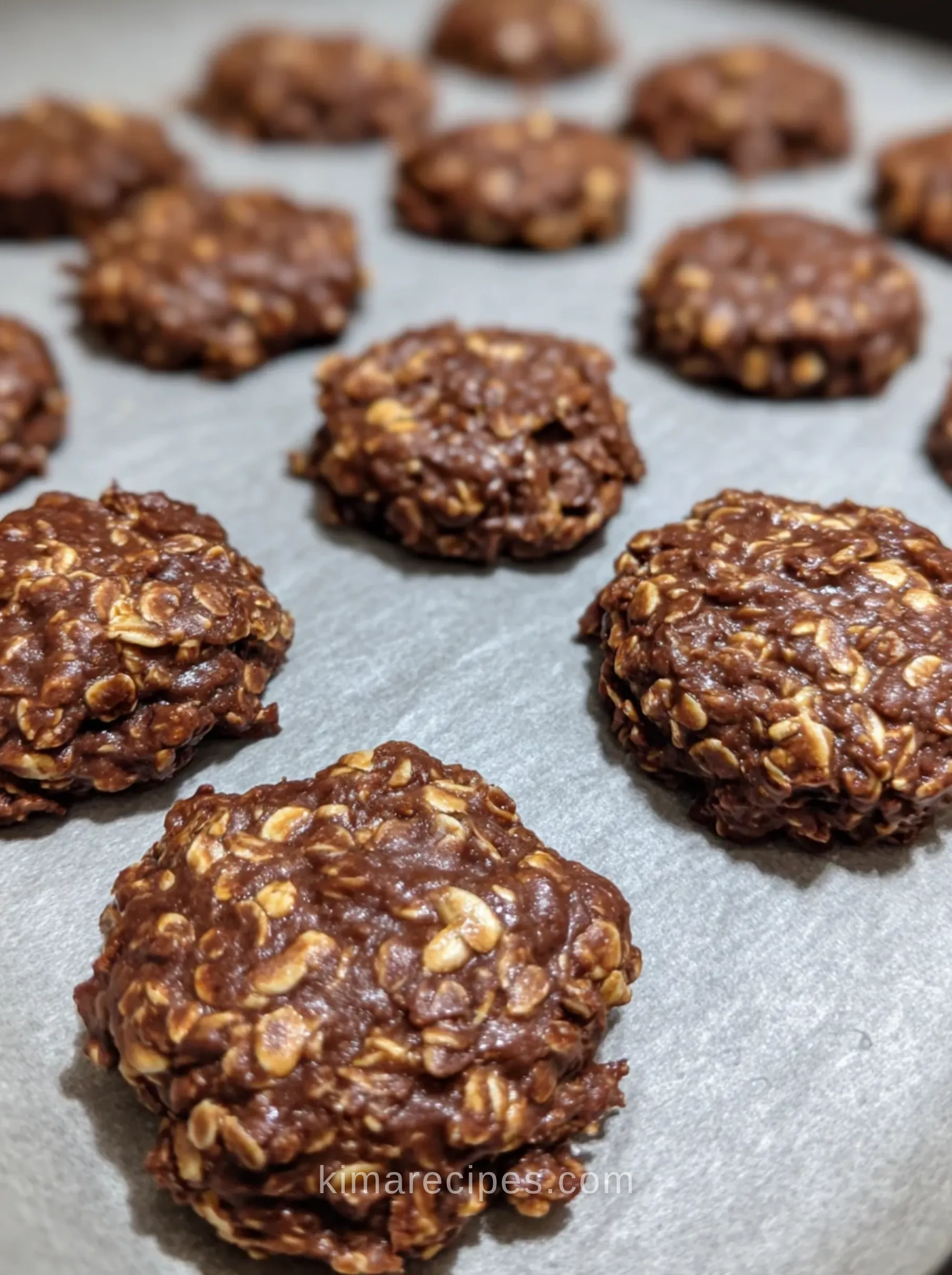
The first batch of no bake cookies I made in this kitchen never turned into cookies. They sat on the parchment as shiny brown puddles for two hours. We ate them off the paper with spoons.
My mistake was small. I started the one-minute timer the second the edges of the pot began to bubble.
The next batch went the other way. I boiled it a full two minutes “to be safe” and got sandy little discs that broke apart in the tin. My family crumbled them over vanilla ice cream and called it dessert. Fine. But it wasn’t a cookie.
So this recipe is built around the one instruction every no bake cookie recipe gives and almost none explain: what a real rolling boil looks like, and the exact moment your 60 seconds begin. Nail that and you get the chewy, fudgy chocolate peanut butter oat cookie that sets on the counter in about half an hour. Miss it, and further down I’ll show you how to rescue the batch instead of throwing it out.
Why This Recipe Works
The boil is really candy-making. Butter, sugar, milk, and cocoa bubble together and water steams off. That concentrates the sugar. Take off too little water and the sugar can’t hold the oats together, so you get puddles. Take off too much and the sugar seizes back into hard grains, so you get crumbs. A full minute at a true rolling boil on medium heat lands the mixture right around 225°F (107°C) at sea level, which is the sweet spot.
The sugar dissolves before the boil starts. Stirring constantly while the butter melts gives every sugar crystal time to disappear. Skip that and the undissolved crystals act like seeds once the mix cools, and the cookies turn gritty.
Peanut butter goes in off the heat. Its fat coats the hot syrup and slows down crystallization, which is a big part of why the texture stays fudgy instead of chalky. Added during the boil, it thickens the pot and scorches on the bottom before your timer is done.
Quick oats, not old-fashioned. Quick oats are thinner, so they drink up the syrup in the few minutes before it sets. Thick rolled oats stay half raw and don’t bond, which is why so many “crumbly” complaints trace back to the oat bag.
A pinch of salt. The classic recipe tastes flat without it. A quarter teaspoon makes the cocoa read as chocolate, not just sweet.
Ingredients for No Bake Cookies
- ½ cup (113 g) unsalted butter, cut into pieces
- 2 cups (400 g) granulated sugar
- ½ cup (120 ml) whole milk
- ¼ cup (21 g) unsweetened natural cocoa powder
- ¼ teaspoon fine salt
- ½ cup (130 g) creamy no-stir peanut butter
- 2 teaspoons vanilla extract
- 3 cups (240 g) quick-cooking oats
A few notes before you shop:
Use no-stir peanut butter. Natural peanut butter, the kind with oil floating on top, leaves a greasy film on the cookies and they set softer. I learned that one from a jar that had been sitting in the pantry long enough to separate.
Natural cocoa gives the old-school flavor. Dutch-process works, but it tastes darker and milder, and to me it stops tasting like the cookie everyone remembers.
Quick oats, not instant. Instant oats are cut so fine they turn the cookies pasty.
Weigh the oats if you can. Scooping straight from the bag packs the cup, and an extra ¼ cup of oats is enough to tip a batch from chewy to crumbly.
Equipment
- 3-quart heavy-bottomed saucepan
- Timer (your phone is fine)
- 1½-tablespoon cookie scoop, or two spoons
- Two baking sheets lined with parchment
- Candy thermometer (optional at sea level, recommended at altitude)
Pan size matters more than people think. In a small 1½-quart pot the mixture climbs up the sides and boils over. In a wide skillet it evaporates too fast and overcooks inside the 60 seconds. A medium saucepan is the right call.
How to Make No Bake Cookies
- Set up first. Line two baking sheets with parchment. Measure the peanut butter, vanilla, and oats and put them right next to the stove. Once the boil is done, you have about three minutes before the mixture gets too stiff to scoop.
- Melt and dissolve. In the saucepan, combine the butter, sugar, milk, cocoa, and salt. Set it over medium heat and stir constantly until the butter melts and the mixture looks smooth and glossy, about 3 to 4 minutes.
- Wait for the real boil. Keep the heat at medium. Let the mixture come to a full rolling boil, with bubbles covering the whole surface, center included. Drag your spoon through it. If the bubbling keeps going while you stir, that’s a rolling boil. If it calms down, keep waiting.
- Boil exactly 60 seconds. Start your timer now, not before. Leave the heat where it is and stir only once or twice.
- Off the heat. When the timer goes, pull the pan off the burner. Stir in the peanut butter and vanilla until melted and glossy, about 30 seconds. Add the oats and stir until every bit is coated.
- Scoop. Drop 1½-tablespoon mounds onto the parchment, about 2 inches apart. If the first couple spread into flat puddles, let the pot sit for one minute and try again. The mix thickens fast.
- Let them set. Leave the cookies at room temperature for about 30 minutes, until firm and no longer glossy. On a humid day give them up to 45. In a hurry, 15 minutes in the fridge works.
Using a thermometer? Pull the pot off the heat at 224 to 226°F (107°C) at sea level, whatever the timer says.
American
No Bake Cookies
Fudgy chocolate peanut butter oat cookies made on the stovetop in 10 minutes. A true rolling boil for exactly 60 seconds is what makes them set every time, never gooey and never crumbly.
Ingredients 8 items
Instructions 7 steps
-
1
Set up first
Line two baking sheets with parchment. Measure the peanut butter, vanilla, and oats and keep them next to the stove. After the boil you have about three minutes before the mixture gets too stiff to scoop.
-
2
Melt and dissolve
In the saucepan, combine the butter, sugar, milk, cocoa, and salt. Cook over medium heat, stirring constantly, until the butter melts and the mixture looks smooth and glossy.
-
3
Wait for the real boil
Keep the heat at medium and let the mixture reach a full rolling boil, with bubbles across the whole surface, center included. Drag a spoon through it: if the bubbling keeps going while you stir, it's a rolling boil.
-
4
Boil exactly 60 seconds
Start the timer only now. Leave the heat where it is and stir once or twice. With a thermometer, pull the pot at 224 to 226°F (107°C) at sea level.
-
5
Add peanut butter and oats
Remove the pan from the heat. Stir in the peanut butter and vanilla until melted and glossy, then add the oats and stir just until every bit is coated.
-
6
Scoop
Drop 1½-tablespoon mounds onto the parchment, about 2 inches apart. If the first ones spread into puddles, let the pot sit for one minute, then continue.
-
7
Let them set
Leave the cookies at room temperature until firm and no longer glossy, about 30 minutes, or up to 45 on a humid day. In a hurry, 15 minutes in the fridge works.
Tips & Substitutions
Array
Nutrition Facts
174 kcal / serving
Protein3g
Fat7.5g
Fiber1.6g
Prep Time, Cook Time, and Servings
- Prep time: 5 minutes
- Cook time: 5 minutes
- Setting time: 30 minutes
- Total time: 40 minutes
- Yield: about 24 cookies
When to Start the 60-Second Timer (the Part Most Recipes Skip)
Every recipe says “rolling boil.” Almost nobody shows you how to tell.
Here’s what I watch for. First, small bubbles break around the edge of the pan. That’s not it. Then the center starts to move, slowly. Still not it. Then the whole surface lifts, the bubbles get big and loud, and the mixture rises noticeably in the pot. Run a spoon through the middle. If the bubbles don’t stop for the spoon, you’re there.
In my 3-quart pan on medium, that takes roughly a minute after the first edge bubbles show up. That gap is exactly why my first batch never set. I was a full minute early.
Living at High Altitude
The timer method gets unreliable once you’re up high. Water boils at a lower temperature at altitude, so 60 seconds of boiling doesn’t concentrate the sugar as much as it does at sea level.
Use a thermometer and lower your target by about 1°F for every 500 feet of elevation. At 5,000 feet, that means pulling the pot at around 215°F. Above roughly 3,000 feet, I’d trust the thermometer over the clock every time.
How to Rescue No Bake Cookies That Didn’t Set (or Went Crumbly)
Most recipes tell you to “try again next time.” You don’t have to waste a pot of butter and peanut butter.
Too gooey, won’t set: Within an hour of scooping, scrape everything back into the saucepan. Set it over medium-low and bring it back to a boil, stirring constantly since the oats are in there now and will catch on the bottom. Boil 30 seconds, then scoop again. The oats come out a little softer the second time. Still worth it.
If they’re only slightly soft, not soupy, skip the re-boil. Freeze them. They firm right up and eat like little fudge bites straight from the freezer.
Dry and crumbly, still warm: Press the whole mixture firmly into a parchment-lined 8×8-inch pan with the back of a measuring cup. Packing it tight holds it together. Let it set, then cut bars.
Dry and crumbly, already set: Put the cookies back in the pot with 2 tablespoons of milk and 1 tablespoon of butter. Warm over low heat, breaking them up, until the mixture clumps together again. Scoop and let set.
Gritty or grainy: This one is hard to undo. The sugar didn’t dissolve before the boil. Next time, keep stirring in step 2 until the mix looks completely smooth.
Tips From Testing These
- Don’t turn the heat up to reach the boil faster. Medium-high gets you there quicker, but it also boils off more water during the 60 seconds, so the cookies come out drier. Patience at medium.
- Rainy day? Boil 10 to 15 seconds longer. My last batch on a wet afternoon still took close to 50 minutes to set, even with the extra time.
- Keep the scoop size consistent. Big mounds stay soft in the middle long after the small ones are done.
- The last few scoops always look rough. The mix starts setting in the pot. Press them together with the back of the spoon and claim them for yourself.
- Stir the oats just until coated. Beating the mixture after this point cools it faster and makes scooping a fight.
Should You Double the Recipe?
No. Make two batches.
A doubled batch in a 3-quart pan takes much longer to reach a rolling boil, holds heat differently, and the 60-second rule stops meaning anything. Then you’re trying to scoop 48 cookies before the pot sets on you. Two back-to-back batches take about ten extra minutes and come out right. If you really want to double it, use a 5-quart pot and a thermometer.
Variations
Coconut no bakes. Swap 1 cup of the oats for 1 cup of sweetened shredded coconut. Chewier, sweeter, very old-fashioned.
Flaky salt on top. Sprinkle a pinch on each cookie right after scooping, while the surface is still tacky. This is the version I make most.
Almond butter. Use it 1:1 for the peanut butter. The cookies set a bit softer and the peanut flavor is gone, so the chocolate leads.
Dairy-free. Plant-based butter sticks and oat milk work. Use sticks, not tub spread, since the tub kind holds more water.
Gluten-free. Use certified gluten-free quick oats. Nothing else changes.
Reduced sugar: skip it. I tried cutting the sugar to 1½ cups. The syrup simply didn’t have enough sugar to set, and I was back to spoon-eating cookies off the parchment. The sugar here isn’t only sweetness. It’s structure.
Make-Ahead and Storage
Room temperature: Airtight container, parchment between layers, up to 4 days.
Fridge: Up to 1 week. They get firmer and fudgier when cold, which half my household prefers.
Freezer: Up to 3 months in a freezer bag. No need to thaw.
What doesn’t work ahead: making the chocolate syrup in advance and reheating it later. Reheating keeps cooking the sugar and you’ll get crumbly cookies. The whole recipe takes 10 minutes of active time, so make it the day you want them.
No Bake Cookies FAQ
Why are my no bake cookies not setting?
The mixture didn’t boil long enough. Most of the time the timer was started when the edges began bubbling instead of when the whole surface reached a rolling boil. High humidity and a thin, watery milk can add to it. Scrape the batch back into the pot and re-boil for 30 seconds (see the rescue section above).
Why are my no bake cookies dry and crumbly?
They boiled too long or too hot. Packed measuring cups of oats are the other common cause.
Can I use old-fashioned oats in no bake cookies?
I wouldn’t. They stay chewy and raw-tasting and the cookies don’t hold together. If rolled oats are all you have, pulse them 3 or 4 times in a blender or food processor first so they act more like quick oats.
Do no bake cookies need to be refrigerated?
No. They set and keep at room temperature. The fridge just makes them firmer.
How long do no bake cookies take to set?
About 30 minutes on the counter, up to 45 when it’s humid, or 15 minutes in the fridge.
Can I make no bake cookies without peanut butter?
Yes. Almond butter or sunflower seed butter swap in at the same amount. If you want to leave the nut butter out completely, cut the oats down to 2½ cups so there’s enough syrup to coat them, and expect a more chocolate-fudge kind of cookie.
Do I need a candy thermometer?
At sea level, no. The timer and the spoon test are enough. Above about 3,000 feet, yes, because the boiling point drops and the 60-second rule stops being reliable.
Final Thoughts
These are better on day two. The oats keep softening overnight and the chocolate gets deeper, so if you can make them the evening before you need them, do. My favorite way to eat one is straight from the freezer next to a hot cup of coffee in the afternoon. Cold, dense, half-fudge. Hard to beat.
And if your batch flops, don’t throw it away. Re-boil it, press it into bars, or crumble it over ice cream like my family did with that first sandy batch. No bake cookies forgive a lot.