The Best Fluffy Pancakes recipe you will fall in love with. Full of tips and tricks to help you make the best pancakes.

There’s a real story behind this name, and it’s not as cheesy as it sounds — well, it is a little cheesy, but bear with me. Back in 2016 a food editor at Delish made a creamy sun-dried tomato chicken, and whoever tasted it said something like “I’d marry you for this chicken.” That line stuck, the recipe went everywhere, and now half the internet has a version. This is mine. Marry me chicken pasta, but built to happen in one pan, because I’m not scrubbing a pot of broth AND a pot of pasta water on a Tuesday.
Quick note before we start: the pasta cooks straight in the broth here, no separate pot of boiling water. That’s not just for fewer dishes — it changes the texture of the sauce, and I’ll get into why below.
Why This Works
Searing the chicken first isn’t optional, even though it feels like an extra step you could skip. Those browned bits stuck to the pan are flavor, and you want them in the sauce, not scraped into the bin. That’s the whole point of deglazing with the broth in step 4 — you’re pulling all that fond back into the dish.
Cooking the pasta directly in the broth (instead of boiling it separately and draining) means the starch that would normally go down the sink stays in your sauce. It’s basically the same idea as a risotto — the pasta releases starch as it cooks, and that starch is what thickens the broth into something clingy and rich instead of thin and watery. Skip this step and boil your pasta separately, and you’ll end up needing a cornstarch slurry or way more cream to get the same texture. One heads up though: broth foams up faster than plain water once it hits a simmer, so don’t wander off — keep an eye on it and stir so nothing catches on the bottom.
Adding the cream after the pasta’s basically done, not before, matters too. Dairy and a rolling simmer don’t always get along — pull the heat back a touch before you stir it in and you won’t get that grainy, split look.
Ingredients
- 2–3 chicken breasts, cubed or sliced
- 1 tsp each salt, pepper, and Italian seasoning (for the chicken)
- 2 tbsp olive oil
- 2 tbsp butter
- 1 tbsp sun-dried tomato oil (from the jar — don’t buy a separate bottle)
- 1 shallot, diced
- 3 garlic cloves, minced
- 2½ cups chicken broth
- ½ lb pasta (a short shape holds up better than something thin — more on that below)
- ½ cup heavy cream
- ½ cup sun-dried tomatoes
- A big handful of spinach
- ½ cup parmesan, grated
- Salt and pepper, to taste
Instructions
- Season the chicken with the salt, pepper, and Italian seasoning. Get a big skillet nice and hot, add a splash of the olive oil, and cook the chicken until it’s properly golden — not just cooked through, actually browned. Pull it out and set it aside; it’ll finish cooking later in the sauce.
- Same pan, don’t wash it. Melt the butter with the sun-dried tomato oil.
- Drop in the diced shallot and garlic. Let it cook down until it smells like something — a minute or two, don’t rush it, but don’t walk away either.
- Pour in the chicken broth and scrape up every brown bit stuck to the bottom of the pan. That’s flavor, not mess. Bring it to a gentle simmer.
- Add the pasta straight into the broth. Cover, and let it cook until al dente, stirring now and then so it doesn’t clump or catch — broth boils up quicker than water so keep half an eye on it.
- Once the pasta’s done, stir in the heavy cream, sun-dried tomatoes, the chicken you set aside earlier, and the spinach. Let the spinach wilt right down into everything.
- Mix in the parmesan until it melts into the sauce.
- Taste it. Add more salt, pepper, or herbs if it needs it. It probably needs a little more than you think.
Prep time: 10 minutes Cook time: 25 minutes Serves: 4
Tips
Use a short, sturdy pasta shape — penne, rigatoni, that kind of thing. Anything thin like angel hair turns to mush cooking in broth like this, it just can’t hold up the same way.
Freshly grated parmesan melts smoother into the sauce than the pre-shredded bagged stuff, which has anti-caking starch on it that fights against melting cleanly. Worth the extra two minutes with a grater.
Don’t skip patting the chicken dry before it hits the pan if you want real color on it — wet chicken steams instead of sears, and you lose that browning that the whole sauce depends on.
If the sauce looks thinner than you want once everything’s stirred in, just let it sit off the heat for a couple minutes before serving. It thickens more than you’d expect as it cools slightly.
Variations
Swap the shallot for a small diced onion if that’s what you’ve got — onion’s sharper and more assertive, shallot’s softer and a little sweet, so the dish leans slightly different but it’s not a dealbreaker either way.
Want heat? A pinch of red pepper flakes in with the garlic works well and doesn’t fight the creaminess.
I wouldn’t bother swapping the heavy cream for coconut milk here, even for a dairy-free version — the coconut flavor doesn’t get covered up by the chicken and sun-dried tomato the way people expect, and it ends up tasting like a different dish entirely. If you need dairy-free, you’re better off building a different sauce base than trying to force this one.
Make-Ahead
Honestly, this one’s best fresh. The pasta keeps absorbing liquid even in the fridge, so leftovers thicken up a lot more than you’d want and can turn a bit gluey by day two. If you do have leftovers, reheat gently with a splash of extra broth or cream stirred in to loosen it back up — don’t just microwave it dry.
FAQ
Can I make marry me chicken pasta ahead of time? Not really, not well. The pasta keeps drinking up sauce as it sits, so it’s noticeably thicker and gluier the next day. It reheats fine with a splash of broth or cream added back in, but I wouldn’t plan on making it a full day ahead if you can help it.
What pasta works best for this? A short, sturdy shape — penne, rigatoni, farfalle. Thin pastas like angel hair or vermicelli break down cooking directly in broth and you’ll end up with mush instead of noodles.
Why is it called marry me chicken? The name traces back to a 2016 Delish recipe by food editor Lindsay Funston — the story goes that someone who tasted it said they’d marry the cook over it, and the name stuck hard enough that it’s now its own genre of recipe across food blogs and TikTok.
Can I use chicken thighs instead of breasts? Yes, and honestly thighs are more forgiving if you’re worried about overcooking the chicken — they stay juicier even if they sit in the sauce a bit longer than planned.
Is this spicy? No, not as written. It’s a creamy, mellow dish. Add red pepper flakes if you want to change that, but there’s no built-in heat here.
Closing Thoughts
This is the kind of dish that’s better with crusty bread on the side than you’d think — not to fill up on, just to drag through whatever sauce is left in the pan once the pasta’s gone, because there’s always a little left and it’s the best part.
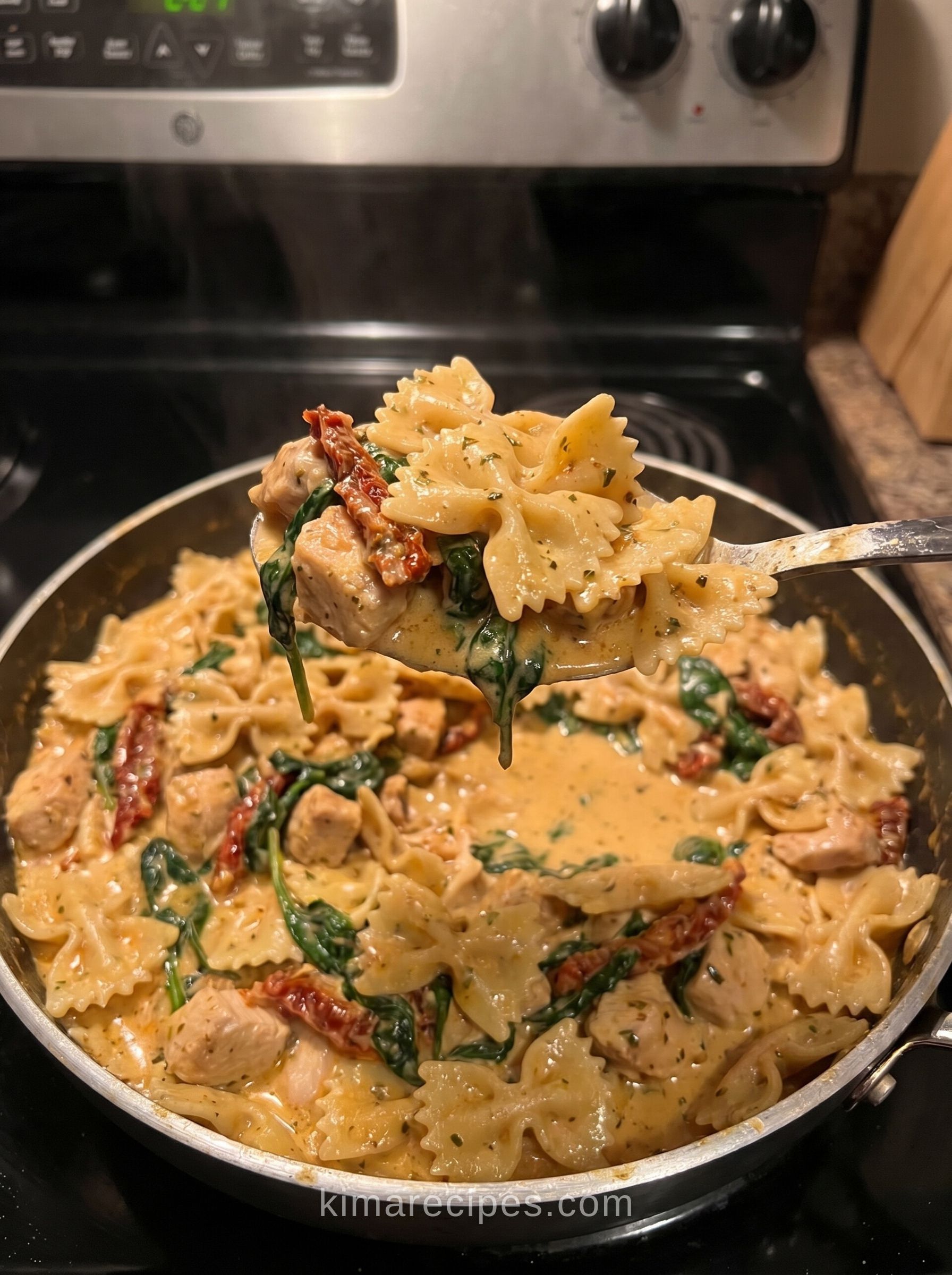
One Pan Marry Me Chicken Pasta
This One Pan Marry Me Chicken Pasta is creamy, cozy, and full of flavor with tender seasoned chicken, sun-dried tomatoes, spinach, parmesan, garlic, and pasta cooked right in the skillet.
Ingredients
Method
- Season the chicken with about 1 teaspoon each of salt, black pepper, and Italian seasoning.
- Heat the olive oil in a large skillet over medium-high heat. Add the seasoned chicken and cook until golden and cooked through. Remove the chicken from the skillet and set it aside.
- In the same skillet, melt the butter with the sun-dried tomato oil.
- Add the diced shallot and minced garlic. Cook for 1 to 2 minutes, stirring often, until softened and fragrant.
- Pour in the chicken broth and scrape up any browned bits from the bottom of the skillet. Bring the broth to a gentle simmer.
- Add the pasta directly into the skillet. Cover and cook, stirring occasionally, until the pasta is al dente and most of the liquid has been absorbed.
- Stir in the heavy cream, sun-dried tomatoes, cooked chicken, and spinach. Let everything cook together until the spinach wilts and the chicken is heated through.
- Mix in the parmesan cheese until melted and creamy.
- Taste and adjust with more salt, pepper, or herbs if desired. Serve warm.
Notes
Use a large skillet: The pasta needs enough room to cook evenly in the broth.
Stir while the pasta cooks: Stir occasionally so the pasta does not stick to the bottom of the pan.
Add more broth if needed: If the pasta absorbs the liquid too quickly before it is tender, add a splash more chicken broth.
Use freshly grated parmesan: Fresh parmesan melts smoother and makes the sauce creamier.
Best pasta shapes: Farfalle, penne, rotini, shells, and rigatoni all work well because they hold the creamy sauce.
Make it spicy: Add crushed red pepper flakes with the garlic for a little heat.
Storage: Store leftovers in an airtight container in the refrigerator for up to 3 days.
Reheating: Reheat gently in a skillet over medium-low heat with a splash of broth, milk, or cream until creamy again. Microwave individual servings in 30-second intervals, stirring between each interval.
Freezing: Freezing is not recommended because creamy pasta sauce can separate, but leftovers can be frozen for up to 2 months if needed.