The Best Fluffy Pancakes recipe you will fall in love with. Full of tips and tricks to help you make the best pancakes.

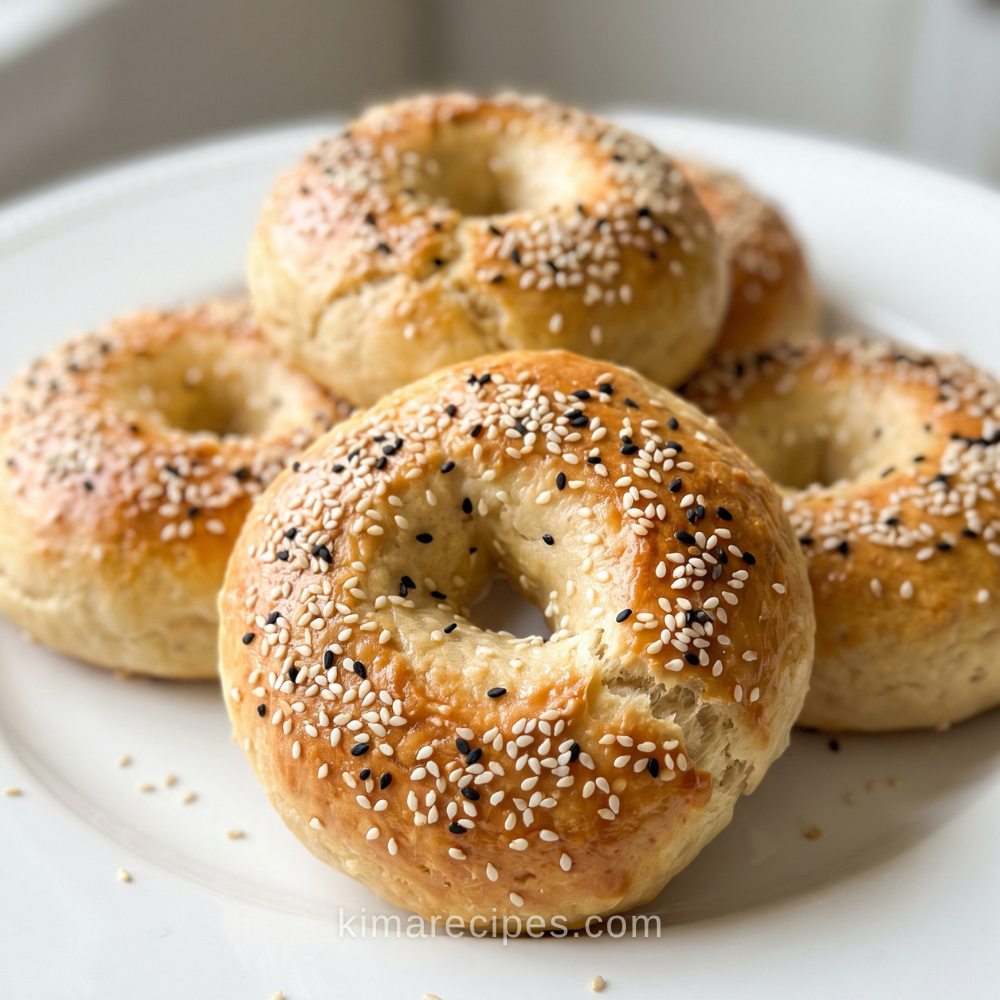
That’s the whole appeal here. Four ingredients, no yeast, no rising, no boiling water bath. You blend cottage cheese until it’s smooth, mix it into self-rising flour, shape it, brush it, bake it. Half an hour later you’ve got something that actually chews like a bagel and holds an egg wash shine like one too.
Why This Works
Cottage cheese straight out of the tub is lumpy, and if you skip the blending step you’ll taste it — little curds sitting in your dough instead of disappearing into it. Blending breaks that structure down into something closer to a thick yogurt, which is what lets it fold into the flour smoothly instead of leaving pockets.
Self-rising flour is doing more work than people give it credit for. It’s already got the baking powder and salt built in, at a ratio that’s been tested for exactly this kind of quick bread — which is why the dough here needs almost nothing else to rise and taste seasoned. Swap in plain flour without adjusting anything and you’ll get a flat, bland disc instead of a bagel.
The other thing that matters and gets skipped: draining the cottage cheese first. Extra whey sitting in the mix means a wetter dough, which means more flour added to compensate, which means a denser, tougher bagel by the time you’re done kneading. Strain it well and you start from drier ground, so you’re not fighting the dough the whole way through.
Ingredients
- 1 cup full-fat cottage cheese, strained (2% works too)
- 1 cup self-rising flour
- 1 egg, for the egg wash
- Everything bagel seasoning, sesame seeds, or your topping of choice (optional)
How to Make Cottage Cheese Bagels
- Preheat the oven to 375°F and line a sheet pan with parchment.
- Blend the cottage cheese in a blender until smooth — no visible curds.
- Move it to a large bowl and add the self-rising flour.
- Mix by hand or with a spatula until combined. It’ll be sticky at first. Add a tablespoon or two of flour if it’s too wet to handle.
- Turn the dough onto a lightly floured surface and knead a few times, just enough to bring it into a ball. More flour as needed, but go easy on it.
- Divide into 4 equal pieces.
- Roll each into a ball, poke a hole through the center with your finger, and stretch it gently into a bagel shape.
- Brush each one with beaten egg and top with sesame seeds or everything bagel seasoning.
- Onto the sheet pan, bake 25–28 minutes, until deep golden brown.
- Let them cool at least 10 minutes before slicing.
Prep time: 5 minutes Cook time: 25 minutes Total time: 30 minutes Servings: 4 bagels
Tips
Don’t skip the cooling time. Slice into these straight out of the oven and the crumb is still gummy — the structure hasn’t finished setting. Ten minutes fixes that completely.
Strain the cottage cheese if there’s any liquid pooling in the container. It’s a small step but it changes how much flour you end up needing.
No self-rising flour in the house? One cup of all-purpose flour plus 1½ teaspoons baking powder and ¼ teaspoon salt gets you there.
Variations
Low-fat cottage cheese — tested at both 4% and 2% — works just as well as full-fat here, so don’t feel like you need to buy the fattier tub for this one. Where I’d draw the line is skipping the egg wash entirely if you’re using toppings: without it, seasoning just slides off the second you touch the bagel, so that step isn’t optional if you want anything to stick.
Make-Ahead
These don’t hold onto that fresh-baked chew for more than a day at room temperature — by day two they start drying out at the edges. Slice and freeze instead if you’re making a batch ahead; a few minutes in the toaster brings them right back.
FAQ
Can you taste the cottage cheese in these bagels? Not really — once it’s blended smooth and baked, the flavor mellows into something closer to a slightly tangy dinner roll. You’re not getting a mouthful of curds.
Do cottage cheese bagels have more protein than regular bagels? Yes. Most versions of this recipe land somewhere around 10–14 grams of protein per bagel depending on the brand of cottage cheese and flour used, compared to roughly 9-10 grams in a standard store-bought bagel of similar size — not a massive gap, but a real one, especially stacked with an egg on top.
Can I use low-fat cottage cheese instead of full-fat? You can, and it works fine. I’ve made these with 4% and 2% and couldn’t tell much difference in the finished bagel.
Why is my dough too sticky to shape? Cottage cheese brands vary a lot in liquid content, so if yours is on the wetter side, add flour a tablespoon at a time until it holds together without sticking to your hands. Straining the cottage cheese before you start helps prevent this in the first place.
Closing Thoughts
Once these are sliced and toasted, a smear of cream cheese is the obvious move, but they hold up just as well split and used for a fried egg sandwich — the slight tang in the crumb actually plays well against something rich like a runny yolk.
About the Author
Kima develops and tests recipes with a focus on quick, protein-forward bakes that don’t rely on yeast or long proof times.
Cottage Cheese Bagels (High-Protein & No Yeast!)
These easy cottage cheese bagels are soft, fluffy, high in protein, and made without yeast. Cottage cheese and self-rising flour create a simple two-ingredient dough that is shaped, topped, and baked until golden brown.
Ingredients
Equipment
Method
Prepare the Bagels
- Preheat the oven to 375°F. Line a sheet pan with parchment paper and set it aside.
- Place the strained cottage cheese in a blender and blend until completely smooth and creamy.
- Transfer the blended cottage cheese to a large mixing bowl. Add the self-rising flour.
- Mix the cottage cheese and flour with a spatula or your hands until a soft dough forms. The dough may be slightly sticky. Add 1–2 additional tablespoons of flour if necessary to make it easier to handle.
- Transfer the dough to a lightly floured work surface. Knead it gently a few times until it can be formed into a smooth ball. Avoid over-kneading the dough.
- Divide the dough into 4 equal portions.
- Roll each portion into a ball. Press a finger through the center of each ball, then gently stretch the opening to create a bagel shape.
- Arrange the shaped bagels on the prepared sheet pan. Brush the tops and sides lightly with the beaten egg.
- Sprinkle the bagels with Everything Bagel seasoning, sesame seeds, or another preferred topping.
- Bake for 25–28 minutes, or until the bagels are puffed and golden brown.
Cool and Serve
- Remove the bagels from the oven and allow them to cool for at least 10 minutes before slicing. Serve and enjoy.
Notes
- Strain the cottage cheese thoroughly before measuring, especially when there is visible liquid in the container.
- Full-fat, 4%, and 2% small-curd cottage cheese can all be used successfully.
- The dough will naturally be slightly sticky. Add only enough extra flour to make it manageable because too much flour can make the bagels dense.
- Allow the bagels to cool for a full 10 minutes before slicing. They are very soft when they first come out of the oven and become easier to slice as they cool.
- To replace the self-rising flour, combine 1 cup all-purpose flour with 1½ teaspoons baking powder and ¼ teaspoon salt.
- The listed 30-minute total covers preparation and baking. Allow an additional 10 minutes for cooling before slicing.