The Best Fluffy Pancakes recipe you will fall in love with. Full of tips and tricks to help you make the best pancakes.

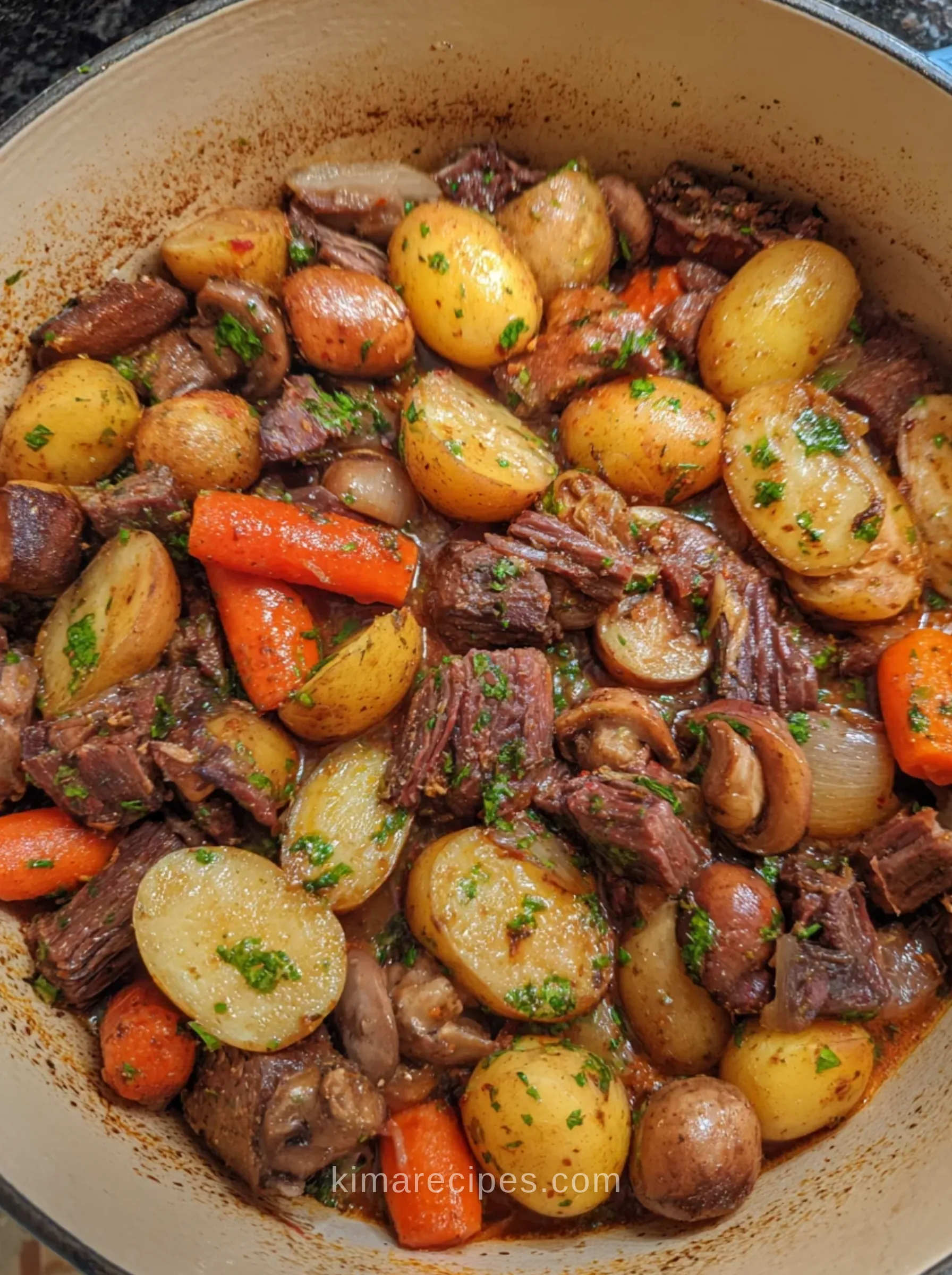
The first Italian beef stew I made was a mess. Good chuck, good tomatoes, and potatoes that had fallen apart into the sauce long before the meat was tender. The whole pot tasted like gravy thickened with mashed potato. My family ate it anyway, because that’s what they do. I wrote “POTATOES LATE” in my notebook in capital letters and tried again the next Sunday.
That second Sunday is the recipe you’re getting here.
It’s my version of spezzatino di manzo: a whole chuck roast cut into big cubes and braised low and slow in tomato and beef broth, sharpened with a splash of balsamic, on top of a soffritto of onion, carrot and celery. Diced beef bacon goes in for salt and a little smoke. A Parmesan rind goes in for depth. And right before it hits the bowls, a spoonful of gremolata, which is just parsley, lemon zest and raw garlic chopped together. That last part is what people ask me about.
You get two ways to cook it below. Dutch oven in the oven, which is my favorite, and my 7-quart oval Crock-Pot, which is what I use on workdays. They are not the same recipe with a different appliance. The liquid and the potato timing change, and I’ll show you where.
Italian Beef Stew vs. Regular Beef Stew (and No, Not the Chicago Sandwich)
Quick clear-up first, because the search results mix these together.
Chicago Italian beef is a sandwich. Thin-sliced roast beef soaked in seasoned jus, piled into a roll with giardiniera. Great sandwich. Totally different dish.
American beef stew usually leans on beef broth and a flour-thickened gravy, sometimes Worcestershire, with potatoes and carrots cooked right in. Brown, thick, spoonable.
Italian beef stew, or spezzatino, starts from soffritto, uses tomato as the braising base, and leans on rosemary instead of a gravy packet. Plenty of Italian cooks pour in red wine. I don’t, and the balsamic trick below is why I never miss it. The sauce cooks down thick and clings to everything instead of pooling like gravy. Less gravy, more braise. In a lot of Italian homes it’s served on its own as a second course, or spooned over soft polenta.
Why This Italian Beef Stew Works
The potatoes wait 90 minutes. Chuck needs about two and a half hours at 325°F before its connective tissue melts. Halved baby potatoes need around 45 minutes. Put them in together and one of the two will be wrong. So in the oven, they go in at the halfway point. In the Crock-Pot it flips: low, wet heat cooks potatoes slower than the beef, so they go on the bottom, sitting in the liquid, from the start.
Three batches when searing. Three pounds of beef in one pot drops the temperature so hard the meat steams grey in its own juice. Nothing sticks to the bottom. And those stuck-on brown bits are where most of the sauce’s color comes from. Three batches, a few extra minutes, a much darker stew.
Balsamic does the job wine usually does. Wine in a braise brings acid and a dark, fruity edge. When I first cooked this with broth alone, the sauce came out heavy and flat, all meat and no lift. One tablespoon of balsamic vinegar, reduced with a cup of broth right on top of the browned bits, brings that edge back. More than a tablespoon and it starts tasting like salad dressing.
Mushrooms get browned and then taken out. Raw mushrooms thrown into a braise let off a lot of water, turn slippery, and thin the sauce. Browned for five minutes in the beef bacon fat, then held back until the potatoes go in, they stay meaty.
Two cuts of carrot. Finely diced carrot in the soffritto melts down and gives the sauce its sweetness and body. Chunky carrot added later stays as a real bite in the bowl. One carrot can’t do both jobs.
The Parmesan rind. It sits in the pot for the whole braise and slowly releases a savory, salty depth into the liquid. I made one pot without it side by side with one pot with it. The rind-less one needed more salt and still tasted flatter. Because the rind and beef bacon both bring salt, the beef only gets a light seasoning up front. You correct at the end.
Gremolata at the table. After three hours in the oven everything is deep and round and a little heavy. Raw garlic and lemon zest cut straight through that. It’s the same trick Milan uses on osso buco, and it works just as well here.
Ingredients
For the stew
- 3 pounds boneless beef chuck roast, trimmed and cut into 1½-inch cubes
- 1½ teaspoons kosher salt
- 1 teaspoon black pepper
- 2 tablespoons all-purpose flour
- 3 tablespoons olive oil, divided
- 4 ounces beef bacon, diced
- 8 ounces small cremini mushrooms, left whole (halve any large ones)
- 1 large yellow onion, finely diced
- 2 medium carrots, finely diced
- 2 celery ribs, finely diced
- 5 garlic cloves, thinly sliced
- ¼ teaspoon red pepper flakes
- 2 tablespoons tomato paste
- 1 can (14.5 ounces) whole peeled tomatoes, crushed by hand
- 3 cups low-sodium beef broth, divided
- 1 tablespoon balsamic vinegar
- 1 Parmesan rind, about 3 inches
- 2 sprigs fresh rosemary
- 4 sprigs fresh thyme
- 2 bay leaves
- 1½ pounds baby potatoes, a mix of yellow and red, halved
- 8 ounces pearl onions or small shallots, peeled and halved
- 3 medium carrots, cut into 1-inch chunks
For the gremolata
- ¼ cup finely chopped flat-leaf parsley
- Zest of 1 lemon
- 1 small garlic clove, finely grated
To serve
- ½ cup freshly grated Parmigiano Reggiano
- Crusty bread
How to Make Italian Beef Stew in a Dutch Oven
- Prep the beef. Heat the oven to 325°F (165°C). Pat the beef cubes very dry with paper towels. Toss them in a large bowl with the salt, pepper and flour until lightly coated.
- Crisp the beef bacon. In a 6- to 7-quart Dutch oven over medium heat, warm 1 tablespoon of the olive oil. Add the beef bacon and cook 5 to 6 minutes, until the fat has run out and the edges are crisp. Lift it out with a slotted spoon into a large bowl.
- Sear the beef in three batches. Turn the heat to medium-high and add another tablespoon of oil. Lay in a third of the beef with space between the pieces. Leave it alone for 2 to 3 minutes, then turn. You want a deep brown crust on at least two sides, about 5 minutes per batch. Move each batch to the beef bacon bowl.
- Brown the mushrooms. Add the last tablespoon of oil and the mushrooms. Cook about 5 minutes, stirring only now and then, until browned. Put them on a separate plate. They come back later.
- Cook the soffritto. Lower the heat to medium. Add the onion, finely diced carrot and celery. Cook 8 to 10 minutes, scraping the bottom as the vegetables release moisture, until soft and golden. Stir in the garlic and red pepper flakes for 1 minute, then the tomato paste for 2 minutes, until it darkens to a brick red.
- Deglaze with broth and balsamic. Pour in 1 cup of the broth and the balsamic vinegar and scrape hard. Simmer 4 to 5 minutes, until it has reduced by about half.
- Build the braise. Add the crushed tomatoes with their juice, the remaining 2 cups of broth, the Parmesan rind, rosemary, thyme and bay leaves. Return the beef and beef bacon along with any juices from the bowl. Bring to a simmer. The liquid should come about three-quarters of the way up the beef, not drown it.
- Braise. Cover and move the pot to the oven for 1 hour 30 minutes.
- Add the potatoes, carrot chunks, pearl onions and mushrooms. Take the pot out, stir them in, pushing the potatoes down into the liquid. Cover and return to the oven for 40 minutes.
- Finish uncovered. Remove the lid and cook 20 more minutes so the sauce tightens and the top browns. The beef is ready when a cube splits with the side of a spoon. If it resists, give it another 20 to 30 minutes.
- Rest and season. Fish out the rind, herb stems and bay leaves. Let the stew sit 10 minutes, then skim the fat from the surface with a ladle. Taste and add salt only now.
- Make the gremolata and serve. Mix the parsley, lemon zest and grated garlic. Spoon the stew into bowls, top each with a little gremolata and grated Parmigiano, and put the bread on the table.
Crock-Pot Italian Beef Stew
Same flavor, different rules. Slow cookers barely let any liquid evaporate, so you use 2 cups of broth in total instead of 3.
- Do steps 1 through 6 above on the stovetop: beef bacon, beef in three batches, mushrooms, soffritto, tomato paste, then the first cup of broth with the balsamic. Keep the browned mushrooms in the fridge until later.
- Put the halved potatoes, carrot chunks and pearl onions in the bottom of a 6- to 7-quart slow cooker.
- Lay the beef and beef bacon on top. Pour over the reduced broth mixture from the pot, the crushed tomatoes and only 1 more cup of beef broth. Tuck in the Parmesan rind, rosemary, thyme and bay leaves.
- Cover and cook on LOW for 8 hours or HIGH for 5 hours.
- Stir in the browned mushrooms for the last 30 minutes. If the sauce looks thin, leave the lid off for that last half hour on HIGH.
- Remove the rind and herbs, skim the fat, taste for salt, and finish with gremolata and Parmigiano.
Prep Time, Cook Time and Servings
- Prep time: 25 minutes
- Cook time: 3 hours 20 minutes (Dutch oven), or about 45 minutes on the stove plus 8 hours LOW in the slow cooker
- Total time: 3 hours 45 minutes (Dutch oven)
- Servings: 6 generous bowls
Dinner • Italian
Italian Beef Stew (Spezzatino) with Parmesan Rind and Gremolata
Chuck roast braised low and slow in tomato, beef broth and a splash of balsamic with beef bacon, a Parmesan rind, baby potatoes, pearl onions and mushrooms, finished with a lemony gremolata. Makes 6 servings.
Ingredients 28 items
- Stew
- Gremolata
- To Serve
Instructions 12 steps
-
1
Prep the beef
Heat the oven to 325°F (165°C). Pat the beef cubes very dry, then toss them with the salt, pepper and flour until lightly coated.
-
2
Crisp the beef bacon
Warm 1 tablespoon olive oil in a 6- to 7-quart Dutch oven over medium heat. Cook the beef bacon until the fat runs out and the edges crisp, then lift it into a large bowl with a slotted spoon.
-
3
Sear the beef in three batches
Turn the heat to medium-high and add another tablespoon of oil. Sear a third of the beef at a time, with space between the pieces, until deeply browned on at least two sides, about 5 minutes per batch. Add each batch to the beef bacon bowl.
-
4
Brown the mushrooms
Add the last tablespoon of oil and the mushrooms. Cook, stirring only now and then, until browned. Set them aside on a separate plate.
-
5
Cook the soffritto
Lower the heat to medium. Cook the onion, finely diced carrot and celery for 8 to 10 minutes, scraping the bottom, until soft and golden. Stir in the garlic and red pepper flakes for 1 minute, then the tomato paste for 2 minutes until brick red.
-
6
Deglaze with broth and balsamic
Pour in 1 cup of the broth and the balsamic vinegar and scrape up the browned bits. Simmer until reduced by about half.
-
7
Build the braise
Add the crushed tomatoes and their juice, the remaining 2 cups broth, Parmesan rind, rosemary, thyme and bay leaves. Return the beef and beef bacon with their juices and bring to a simmer. The liquid should reach about three-quarters of the way up the beef.
-
8
Braise in the oven
Cover and braise in the oven.
-
9
Add potatoes, carrots, onions and mushrooms
Stir in the potatoes, carrot chunks, pearl onions and browned mushrooms, pushing the potatoes down into the liquid. Cover and return to the oven.
-
10
Finish uncovered
Remove the lid and cook until the sauce tightens and a cube of beef splits with the side of a spoon. If it resists, give it another 20 to 30 minutes.
-
11
Rest, skim and season
Remove the rind, herb stems and bay leaves. Rest the stew for 10 minutes, skim the fat from the surface, then taste and add salt.
-
12
Make the gremolata and serve
Mix the parsley, lemon zest and grated garlic. Serve the stew topped with gremolata and grated Parmigiano, with crusty bread on the side.
Tips & Substitutions
Slow cooker: do steps 1 to 6 on the stove, put the potatoes, carrot chunks and pearl onions in the bottom of a 6- to 7-quart slow cooker, add the beef, beef bacon, reduced broth mixture, tomatoes, only 1 more cup broth, the rind and herbs. Cook on LOW 8 hours or HIGH 5 hours. Stir in the browned mushrooms for the last 30 minutes.
If the beef is still tough at the end, it needs more time, not less. Give it another 20 to 30 minutes.
Use plain balsamic vinegar, not balsamic glaze. Red wine vinegar works too.
Freeze without the potatoes for up to 3 months. Potatoes turn grainy after thawing.
Make the gremolata right before serving. It loses its brightness within a few hours.
Nutrition Facts
755 kcal / serving
Protein49g
Carbs38g
Fat47g
Fiber6g
Tips From My Kitchen Notebook
Buy a whole chuck roast and cut it yourself. I tried the packaged “stew meat” once. It was a mix of cuts, and the leaner round pieces came out dry and stringy while the chuck next to them went soft. A 3-pound roast loses a few ounces to trimming. That’s fine. Cut it big, 1½ inches, because it shrinks by about a third.
Tough beef at the 2½-hour mark means it’s underdone, not overdone. This one catches people. Chewy chuck needs more time, not less. Lid back on, another 20 to 30 minutes, check again.
Plain balsamic vinegar, not balsamic glaze. The glaze is thickened and sweetened, and it scorched on the bottom of my pot the one time I grabbed the wrong bottle. Regular supermarket balsamic is perfect here.
Low-sodium broth matters more than usual. A full cup of it gets reduced by half at the start, and the beef bacon and rind add their own salt. Regular broth pushed one of my test pots over the edge.
Freeze your Parmesan rinds. I keep a zip bag of them in the freezer door. They go into the pot straight from frozen, no thawing.
Don’t rush the tomato paste. Two full minutes, until it goes from bright red to rusty. Raw paste tastes tinny in a long braise.
Skim after resting, not during. Chuck and beef bacon both give off a fair amount of fat. Ten minutes off the heat and it all floats to the top in a clean layer. Tilt the pot, run a ladle along the surface, done.
Variations
Over polenta, no potatoes. Leave the potatoes out and spoon the stew over soft, cheesy polenta. Honestly, this is how I like it best. The polenta catches the sauce in a way potatoes don’t.
A pinch of cinnamon. Some Italian cooks add it, and it’s worth trying. ⅛ teaspoon with the tomato paste. You won’t taste cinnamon, just a warmer background.
More heat. Double the red pepper flakes to ½ teaspoon. The ¼ teaspoon in the main recipe is a warm background, not spicy.
Butternut squash instead of potatoes. 1-inch cubes, same timing as the potatoes. Sweeter, softer, very good in November.
The jarred marinara shortcut. I tried it so you don’t have to. Swapping the tomatoes and paste for a jar of pasta sauce made the stew sweet and one-note, like spaghetti night with chunks of beef in it. I wouldn’t do it again.
Make-Ahead, Storage and Freezing
This Italian beef stew is better on day two. The sauce settles, the flavors pull together, and the fat sets in a hard layer on top in the fridge, so you can lift it off in one piece. Make it the day before, reheat gently on the stove over medium-low with a splash of broth, and make the gremolata fresh.
Fridge: 3 to 4 days in a covered container.
Freezer: up to 3 months, but freeze it without the potatoes. Potatoes come out of the freezer grainy and spongy, and no amount of reheating fixes that. If I know a batch is headed for the freezer, I leave the potatoes out entirely and serve it later over polenta or with freshly boiled potatoes.
What doesn’t work ahead: the gremolata. Lemon zest goes dull and raw garlic turns harsh within a few hours. It takes two minutes to make, so make it right before serving.
Italian Beef Stew FAQ
What is Italian beef stew called in Italy?
Spezzatino di manzo. “Spezzatino” comes from spezzare, to break into pieces, which is about the meat being cut into chunks. Every region and pretty much every family has its own version. Some use no tomato at all.
What’s the best cut of beef for Italian beef stew?
Chuck roast. It has enough fat and connective tissue to turn tender and juicy over a long braise. Leaner cuts like round dry out.
Can I make Italian beef stew without wine?
Yes, and this one is. A lot of traditional spezzatino recipes use red wine, but here a cup of low-sodium beef broth plus a tablespoon of balsamic vinegar does the deglazing. The vinegar brings the acidity wine normally would, and reducing it on the browned bits gives the sauce its dark color. Red wine vinegar works too, with a little less sweetness. Honestly, I prefer the balsamic.
Why is my beef stew meat still tough?
Because it needs more time. Chuck goes through a tough stage before the collagen breaks down into gelatin, and that stage can last longer than the recipe says, depending on the cut and your oven. Keep it covered, keep it at a low simmer, and check every 20 minutes. Boiling hard is the other culprit. A rolling boil tightens the muscle fibers, so keep the heat gentle.
Can I make this in a slow cooker?
Yes, and the Crock-Pot method is written out above. Use half the broth and put the potatoes on the bottom.
Can you freeze Italian beef stew with potatoes?
You can, but I don’t recommend it. The potatoes turn grainy after thawing. Freeze the stew without them and add fresh potatoes or polenta when you reheat.
Can I use dried herbs instead of fresh?
Yes: 1 teaspoon dried rosemary and ½ teaspoon dried thyme. But fresh rosemary sprigs make a real difference here, and they’re cheap.
Closing Thoughts
There’s always a little left in the pot, usually two cups or so, mostly beef and sauce. That’s Monday’s dinner. Shred the beef right in the sauce with two forks, loosen it with a ladle of pasta water, and toss it with pappardelle and a big handful of Parmigiano. It tastes like a ragù that took all day, because technically it did.
On the side, nothing fancy: a pile of arugula dressed with lemon juice, olive oil and salt. Something sharp and cold next to a hot, rich bowl is exactly right.